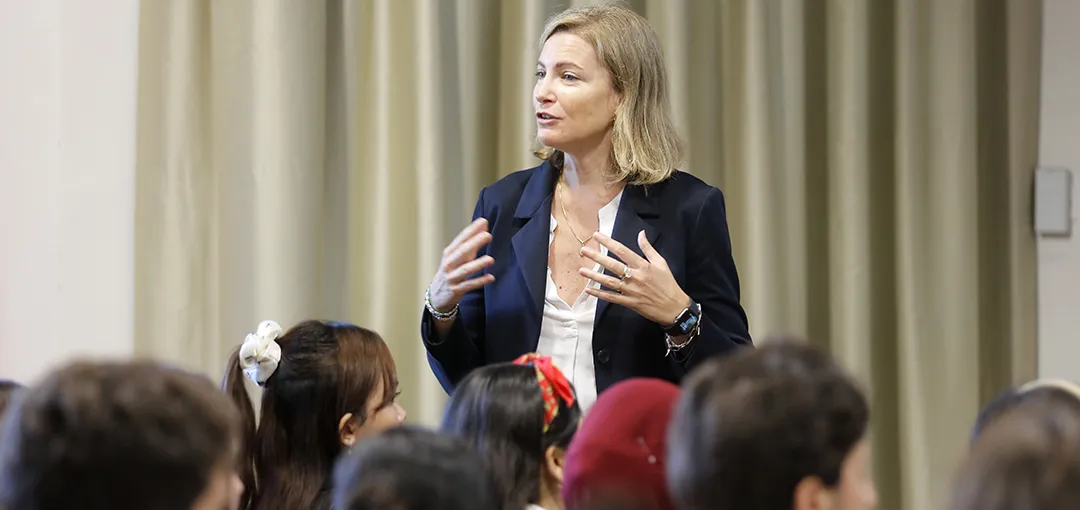
This thematic track, part of The INCLUDE Webinar Series, addresses inclusion and equity within everyday teaching and working practices in higher education, focusing on staff directly involved in teaching and learning activities. It examines how institutional cultures, communication practices, and power relations affect well-being, participation, and belonging.
Key themes include neurodivergence among staff, workplace bullying, and the challenges of teaching and working in polarised or “extreme” social contexts. Particular attention is given to inclusive communication in professional and educational settings, supporting staff in fostering fair, respectful, and effective learning environments.
At the end of the webinar series, participants who have attended at least 75% of the online sessions will be eligible to take part in an in-person Summer School to be held at the University of Pisa from the 6th to the 10th of July 2026.
Who should attend
- Academic staff engaged in teaching, tutoring, or educational design
- Administrative and technical staff involved in learning support, training, or student services
- Staff members contributing to teaching-related activities, regardless of formal faculty status
- Professionals interested in inclusive communication, well-being, and organisational culture in higher education
Digital seminars
Inclusion, along with diversity and equity, is one of the key words of the present, and represents the efforts of a society that, aware of its structural injustices, seeks to overcome them in the direction of greater social and cultural justice. Beyond cultural and political circumstances that are not always favorable to inclusion movements, the time has come to recognize the limits of this perspective, which continues to divide society's members into those who are normal and those who are different (thus "abnormal"), with the idea that the former have the role of including the latter. Is it possible to imagine another kind of society, one in which differences are not to be included, but in which people, recognizing their mutual differences, can attempt to coexist?
Starting from the premise that the goal of (higher) education goes beyond employability concerns and includes shaping the minds and spirits of students whom we want to turn into wholesome persons and responsible citizens in our increasingly polarized societies, the session draws on experiential learning and suggests three paths to turn our diverse classrooms into inclusive and collaborative spaces for joint knowledge generation. Firstly, challenging and broadening the epistemic sources we rely on in our teaching; secondly, setting the rules for trust-based and safe interactions; and finally, setting the basis for inclusive and fair dialogical dynamics and for generating a higher degree of emotional involvement among class participants.
This webinar provides an evidence-based overview of workplace bullying, with a specific focus on higher education settings. It explores how academic hierarchies, power asymmetries and organisational cultures can enable bullying to emerge and persist within universities. The session examines early warning signs, challenges in recognition and reporting, and the individual and institutional consequences of prolonged harmful behaviours. Drawing on international research, it discusses why bullying remains difficult to address in higher education despite formal policies, and presents practical, multi-level prevention and response strategies tailored to academic and administrative staff. The webinar concludes with a case study grounded in real-world higher education contexts.
This interactive webinar explores neurodiversity and neuroinclusion in higher education through research-informed practice and lived experience. Drawing on the Diverse Brains, Inclusive Education courses co-created with neurodivergent staff and students at King’s College London and the University of Warwick, the session examines how teaching practices, assessment, peer interactions, and institutional cultures can unintentionally exclude neurodivergent individuals. Participants will work through real-life scenarios and reflect on inclusive responses, shared responsibility, and practical strategies to foster neuroinclusive learning and working environments.
This webinar explores neurodivergence, Reasonable Accommodation, and Universal Design for Learning (UDL) as core principles for inclusive and accessible university teaching. Shifting from a reactive, individualised response to an ex ante planning approach, it argues that inclusion should be embedded in course design from the outset. Drawing on pedagogical research and the Inclusive Teaching UNIPI project, the session illustrates how flexible learning environments, multiple modes of engagement, and diverse assessment strategies enhance learning quality for all students, while promoting equity, accessibility, and democratic participation in higher education.
The webinar Understanding Intersectionality, introduces intersectional analysis as a critical lens for recognising complex identities and shaping more equitable academic communities.
Join the webinars

INCLUDE Webinar Series
Registration
- Sunday, March 29 (for the Keynote Speech)
- Sunday, April 12 (for the webinars)
Summer School in Pisa
At the end of the webinar series, participants who have attended at least 75% of the online sessions will be eligible to take part in an in-person Summer School to be held at the University of Pisa from the 6th to the 10th of July 2026.
The Summer School will represent the final component of the programme and is intended to consolidate and further develop the knowledge acquired during the webinars, ensuring continuity and a shared academic foundation among participants.
Find out more about the Summer School here (info and registration form).
Additional information
- Micro-credentials will be recognised for attending the webinars
- 5 ECTS: For attending the final Summer School
Contact
For any questions regarding the course content, structure, participation, or general organisation, please contact Alessandra Meoni (alessandra.meoni@unipi.it).
For questions related to funding, ECTS recognition and mobility, please contact the Circle U. office at your home university:
-
Aarhus University: aarhus@circle-u.eu
-
University of Belgrade: Nikola Savić – nikola.savic@rect.bg.ac.rs
-
Humboldt-Universität zu Berlin: berlin@circle-u.eu
-
King’s College London: circle-u@kcl.ac.uk (Erasmus+ funding not available; internal funding may apply)
-
UCLouvain: infocircleu@uclouvain.be
-
University of Oslo: oslo@circle-u.eu
-
Université Paris Cité: circleu.iro@u-paris.fr
-
University of Pisa: circleU.erasmus@unipi.it
-
University of Vienna: circle-u@univie.ac.at