A globally recognised research-intensive institution
Aarhus University is an academically diverse and highly international university with 50+ Master's and Bachelor's degree programmes in English. Around 12 per cent of AU’s 37,000 students are international, representing over 120 nationalities. With 4 campuses across Denmark, the main campus is located in the beautiful city of Aarhus and the university is known for its vibrant student environment.
Aarhus University comprises five faculties: Arts, Aarhus BSS, Health, Technical Sciences and Natural Sciences - and a number of internationally recognised research centres and a strong entrepreneurial environment. All degree programmes are deeply rooted in excellent research and are subject to a rigorous quality assurance programme to ensure they meet the highest global quality standards. Classes are taught by highly committed researchers in an informal, stimulating atmosphere.
Two researchers from Aarhus University have been awarded the Nobel Prize, while a large number of AU researchers have received prestigious research awards and grants. The university strives to combine the high level of academic standards of its researchers with collaboration across disciplinary boundaries. It ranks among the top 100 and 150 universities in the world on several internationally recognised world rankings.

Aarhus University and Circle U.
- Aarhus University coordinates Circle U.’s mobility efforts (Work Package 2) – Lotte Skovborg is the WP2 coordinator
- Aarhus University coordinates the Circle U. InCUbator (Work Package 5) - Merethe Kruse is head of the InCUbator
- Knud Warming is the local Circle U. coordinator at AU
Latest at Aarhus University
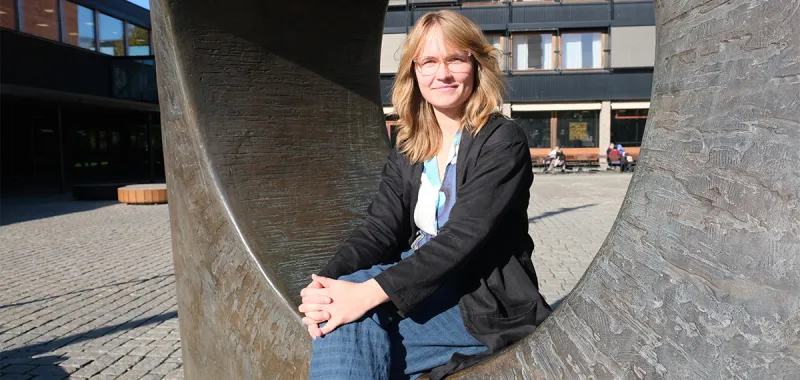


From Campus to Career: Helping Students Turn Language Skills into a Career Asset

Events

Circle U. for Early Career Researchers: Funding, Mobility and more

Circle U. Student Info Session & Welcome Day

Open Conversation Series: Plastic: The Global Challenges of a Wonder Material

Discover COIL: Bringing International Collaboration into Your Teaching
Meet the Circle U. team at Aarhus University

Do you have questions about Circle U.?
Get in touch with our local Circle U. coordinator Knud Warming at warming@au.dk.
For questions about mobility matters, contact WP2 coordinator Lotte Skovborg at skovborg@au.dk.
For questions about the CU InCUbator, contact Merethe Kruse at mekr@au.dk.
Management Board member

Berit Eika
- Pro-rector for Education
- Aarhus University

Berit Eika
- Pro-rector for Education
- Aarhus University
Berit Eika is Pro-Rector of Aarhus University with special responsibility for the area of education. She took up the position as Pro-Rector in 2014 and is particularly committed to preparing students for the labour market of the future and to promoting a coherent education system. As Pro-Rector, she focuses on ensuring the quality of the university’s study programmes.
For more than 20 years, Berit Eika has worked on educational and education policy matters — including as the head of Denmark’s first university centre for medical education at Aarhus University, and later as Vice-Dean of the university’s Faculty of Health.
Berit Eika became Professor of Medical Education in 2010 and holds a medical degree (1986) as well as a PhD (1994) from Aarhus University. She also holds two master’s degrees: one in Medical Education from Maastricht University and one in Health Informatics from Aalborg University. As a professor, she has served as an advisor to the universities of Lund, Tromsø, Bergen, and Oslo, as well as to the Karolinska Institute.
Academic Chairs

Morten Foss
- Faculty of Natural Sciences
- InCU.bator
Morten Foss
- Faculty of Natural Sciences
- InCU.bator
Dr. Foss received his PhD in 1994, after which he worked 7 years in industry. Now he heads a research group at iNANO containing strong interdisciplinary competences focusing on surfaces/interfaces related to biomedical applications. Morten Foss has published 78 articles (H-index of 31) and has his name on 8 patents.

Gergely Bérczi
- Department of Mathematics
- Knowledge Hub on AI
Gergely Bérczi
- Department of Mathematics
- Knowledge Hub on AI

Hans Sanderson
- Department of Environmental Science
- Knowledge Hub on Climate
Hans Sanderson
- Department of Environmental Science
- Knowledge Hub on Climate
He chairs a center for climate services at AU focusing on climate and transitional risks. His research interests range from sustainability, environmental risk analysis and climate risk assessment to international environmental policies. He has been instrumental to the establishment of Aarhus University CO2e inventorying methods across all universities in Denmark. 2015 he chaired the 2. European Climate Change Adaptation Conference on behalf of the EU Commission. He has since 2016 served as national expert to the Horizon 2020 (SC5) and Horizon Europe (Cluster 6) Programme Committee for Denmark. 2020-2023 he was European Climate Pact Ambassador for Aarhus University.

Lars Johannsen
- Aarhus School of Business and Social Sciences
- Knowledge Hub on Democracy
Lars Johannsen
- Aarhus School of Business and Social Sciences
- Knowledge Hub on Democracy
Lars Johannsen studies the nexus of democratization, governance, and corruption. He pioneered student-driven research on election observation. Publications include “Tell-tale tit: retaliation on whistleblowers in public administration; “Recent Developments in Democracy in Slovenia (Problems of Post-Communism); “Where and How You Sit: How Civil Servants View Citizens’ Participation” (Administration & Society).

Christian Morberg Wejse
- Faculty of Health
- Knowledge Hub on Global Health
Christian Morberg Wejse
- Faculty of Health
- Knowledge Hub on Global Health
Christian Morberg Wejse is a research clinician who is a specialist in infectious diseases and professor at Aarhus University Hospital, with a research focus on tuberculosis and HIV in low-income countries, COVID-19 and migrant health. He has founded and directs GloHAU, Center for Global Health, Aarhus University.

Mette Zølner
- School of Communication and Culture
- Multilingualism, Interculturality and Language Lab (CU.mil)
Mette Zølner
- School of Communication and Culture
- Multilingualism, Interculturality and Language Lab (CU.mil)
Mette Zølner is Professor of Intercultural Studies at Aarhus University (DK) since 2020. She obtained her PhD in social sciences at the European University Institute in Florence (Italy), an MA in European studies from KU Leuven, and an MA in French Studies from AU. Mette Zølner has worked at the Copenhagen Business School for more than 20 years. Her research adopts an interdisciplinary and systemic approach to interculturality in organizational contexts with a focus on how organizations and their social actors negotiate and contest meanings, identities and practices at the interface between global and local practices. She has explored these questions empirically and qualitatively, adopting a multi-level and interpretive/critical approach to studies of MNCs, SMEs and non-profit organisations in different regional contexts.