Measuring Circle U.’s impact across Europe
Circle U. aims to enhance the knowledge, skills and mindsets of its students and staff through transnational learning experiences to collectively tackle the central challenges that Europe and the World face. To best identify the challenges to implementing educational initiatives and innovative research while simultaneously understanding the positive results, outcomes and impacts, Circle U. has, from the beginning, committed itself to a monitoring, evaluation, and learning (MEL) approach to. A MEL strategy has been developed, and updated, over the years to best measure and evaluation the impact Circle U. has. The insights gained through the MEL strategy have provided the opportunity to improve and adapt to guide the alliance toward Circle U’s long-term vision and mission. The following narrative has been established through the MEL strategy.
Circle U. in numbers
9
Universities
+500K
Students
60K
Staff
Our growing academic and collaborative network :
- 45 Associated partners
- 8 Knowledge Hubs, Platforms
- 85 Academic Chairs
- ~100 out and activities so far in CU2030
- 20 ECTS offerings from 2024-2025 (anticipating at least 16 from 2026)
- 12 BA modules on sustainability from 2024-2025 (anticipating at least 6 more in 2026)
Our pathway to impact: key initiatives, programmes, and schemes
Seed Funding Highlight
- 4 Calls
- 51 funded projects
- 202 applications over four rounds
- Collaborations with ~40 external and associated partners
- ~€400k given to projects
- Graph on types:
- Research vs. Education vs. student-led
Case Studies
TeNEt
The Teacher Education Network (TENet), which received the full €10,000 grant from the CU seed fund in 2023, was created as a working group of the CU.til with members (from UB, KCL, UCLouvain, UiO, UNIVIE, HU) that works toward highlighting outstanding interdisciplinary teacher education among partner universities. The main objective of the project was to develop joint courses, invite students as co-researchers and increase opportunities for student and staff mobility. The activities include three in-person workshops of group members and seven online workshops/ meetings. They also marked the “end” of the project with a CU Open Conversation in Jan. 2025. However, the project will continue as the HU partner received funding for “HIT- Humboldt International Teacher Training” from DAAD from 2025-2029 and plan to continue collaborations with CU partners (KCL, UNIVIE, UiO, and UB) and external partners to further develop student and staff mobilities in teacher education that focuses on research-based educational formats.
Sustainable Changemakers Programme
Launched from the first seed fund call, the SCMP aimed to co-create a programme around the theme of innovation and sustainable entrepreneurship with students, specifically to team-up at an international and interdisciplinary level and fostering their awareness and understanding of sustainable innovation.
The first iteration in 2022-2023 saw 19 students who participated in three-day event held at UCLouvain. In the second iteration from 2023-2024 43 students attended the final event, which was reserved for MA and PhD. The 2024-2025 saw 65 students (a third from UCLouvain Louvain School of Management and two-thirds from international partners). The activity has received consistently good feedback from participants.
Additionally, this project has also led to a sort of experimentation with embedding CU activities into the study programmes and offers of the CU universities. The InCU.bator Chair leading on the project at UCLouvain went through a “programme reform procedure” to adapt the course to the format of a change-maker course, which included a new title, transitioning from French to English, adjusting the learning objectives, the assessment method, and the course schedule. This system has allowed an official code to be assigned to this course, made it credited (5 ECTS), but it has also enabled it to be included in the chairs official teaching load, which is crucial as they will soon no longer have the teaching release granted to compensate for the chair mandate. The Chair noted that, “with these changes, the involvement of my other colleague professors from other universities has decreased, but 3 of them are still verry involved in upholding the original spirit of Circle U.”
Additionally, it was reflected that the SCMP received more applications for the third edition of the course, probably due to its credited format and with the support of a BIP for mobility expenses and the communication made by each university, the students themselves who are alumni of the program, as well as through the Open Campus.
The “CereNET”
This project had a short-term goal of building a research network to reconcile the taxonomy of the Bacillus cereus group. Through this network, a framework has been developed that accommodates the phylogenetic approach, while still retaining some of the clinical, environmental, and socioeconomic aspects associated with the classical species. The project began with a hybrid meeting in Louvain-la-Neuve on 10-11 January 2024 , to initiate a discussion among 20 worldwide experts, identified prior to the funding period. The outcomes of the meeting in Louvain-la-Neuve have been translated into a publication (opinion paper) that addresses the inherent challenges to the research. The long-term goal of the project and network is to agree and finalise a taxonomy which has broad acceptance and legitimacy in the community, to avoid clinical misidentification which threaten food security and public health. This project has resulted in the strong collaborations within the network that have extended beyond the funding period. In fact, the network is currently collaborating on a taxonomic framework that will be presented at two international meetings:
- International Congress on Invertebrate Pathology and Microbial Control (Vienna, July 2024)
- Bacillus-ACT 2024 (New Delhi, October 2024), where the project partners are collaborating with organisers of the event for an open round table to discuss the framework that has been developed.
This network hopes that this work will impact not only clinical microbiology and the food industry, but also in the legal framework used by organisation s such as WHO, OECD, and EFSA, assuring correct identification and safe utilisation of the species.
Further expected outcomes include:
- A research paper on the taxonomy of the B. cereus group and provides a phylogenomic update.
- Prepare a project proposal to explore the role of Mobile Genetic Elements
- Submit a COST Action Proposal (call 2024 or 2025) with the goal of extending the research network and disseminate the efforts initiated by Circle U. Seed-funding.
Circle U. EcoU
This project brought together various outputs and outcomes during the project which included a tree planting initiative during April 2023 which saw 170 volunteers (mostly University of Belgrade students with students from the other Circle U. partners as well) plant 30,000 willow trees across Serbia which contributed to the reforestation efforts in the region to improve the local environment by increasing greenery and biodiversity. The second part of the project involved educational awareness programme for elementary aged student in a Serbian school. This programme engaged more than 50 students in interactive classes and games about environmental and ecological challenges across Europe and empowered students to consider their role in improving these challenges, as seen in figure 6 below. Additionally, the activity engaged students in multilingualism as well, as the course was taught in English. Students who organised the event have no further plans to continue this event but remain interested in collaborating as Circle U. alumni.
Additionally, one CU.til Chair reflected in an interview that the TENet led to a broaden of their network among the students in their universities. In fact, when a visiting professor from a US university came to the university and was looking for students who may support some research they were pursuing, the Chair was able to recommend students who had been a part of the co-research aspect of the project to an external visiting professor.
Academic Chair Programme
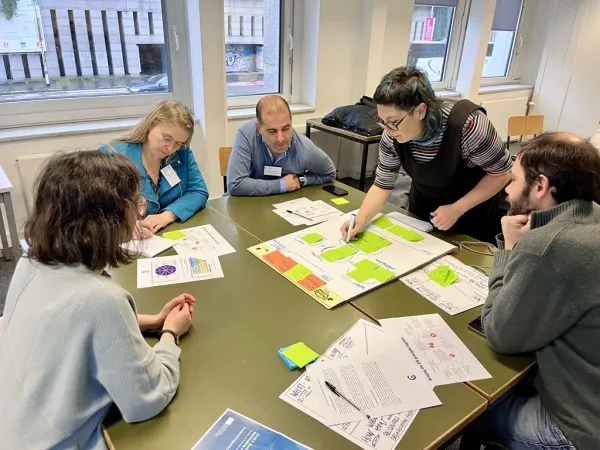
From the early developmental and planning stages of Circle U. (CU), there has been a clear and consistent mandate that the Academic Chair Programme (ACP) is the backbone of the CU ecosystem.
The broad aims of the ACP are to ensure strong and sustainable collaborations between individuals across CU, including academics, researchers, students, staff, and our associated partners. The ACP is meant to drive meaningful engagement that ties together the various communities in CU and results in transformational approaches to education, research, and societal outreach. It lies at the core of the CU’s vision and mission.
There are currently 76 academic chairs across the 8 Knowledge Hubs and Platforms and the Open Campus, with the addition of 7 academic directors and a Vice-Dean and Dean of the Open Campus. The Knowledge Hubs and Platforms address: AI, Climate, Democracy, Global Health, CU.til, CU.mil, InCU.bator, Open Campus.
It gave me an opportunity to be a mentor to someone I would not have met [without the summer school] as they were in another department at my university and I think this shows the true spirit of interdisciplinarity within Circle U.

Climate Chair
This has been an opportunity for me to further develop an activity, summer schools, that have been difficult to develop in my own university due to changes in financing guidelines. And this has been a great opportunity for me and the students at my university.

Democracy Chair
Circle U. has opened not just opportunities between hubs/ platforms and universities, but also within my own universities I’ve been able to connect with other staff and students. I even was able to recommend students to support visiting professors to our university based on activities they had done in my platform in Circle U.