Discover our language & intercultural lab in action
The CU.mil aims to foster multilingualism and interculturality across Circle U. It offers formal and informal learning opportunities in the fields of multilingualism, interculturality and language learning. The CU.mil aims to drive the research in these fields forward, to develop multilingual and intercultural competences, and to enhance knowledge in these areas for all students and staff at Circle U. universities.
Latest on the CU.mil
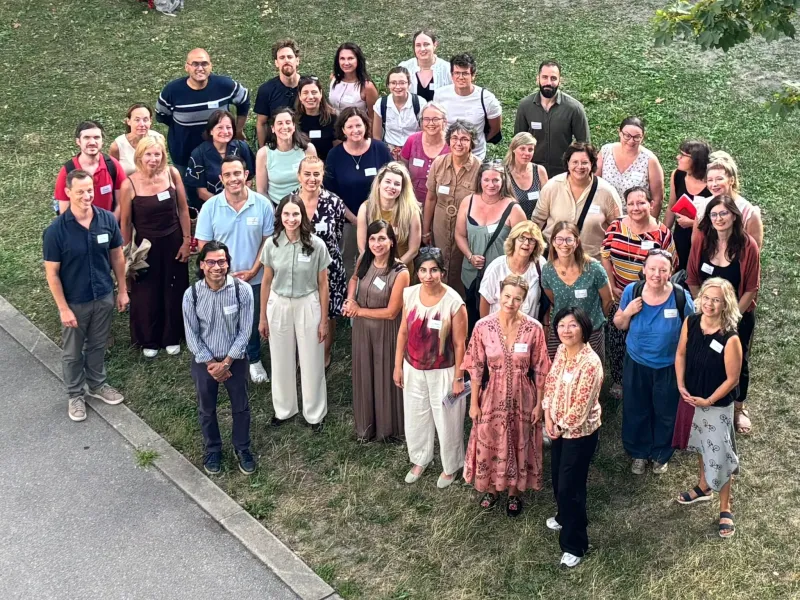

From Campus to Career: Helping Students Turn Language Skills into a Career Asset

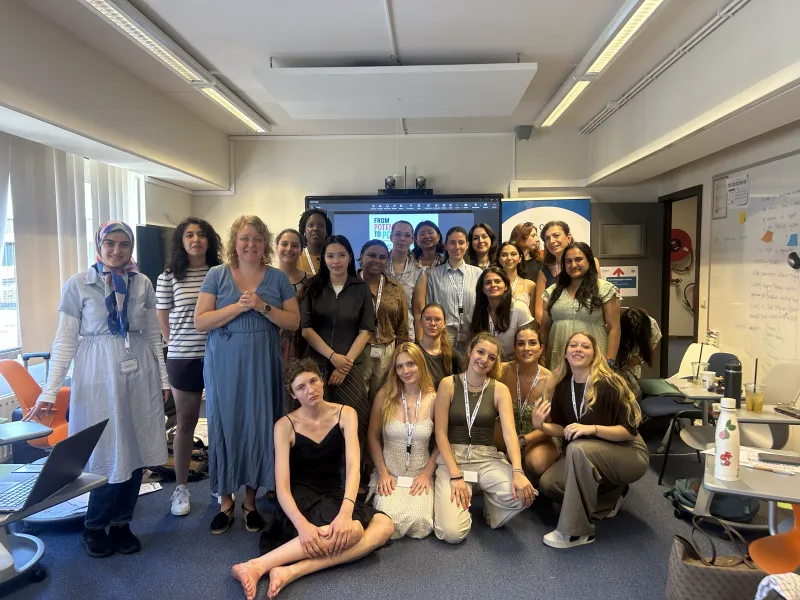
Language Compass & Companion
Language Compass
The Circle U. Language Compass was developed by the CU.mil as a framework to support multilingualism, interculturality, inclusion, and knowledge building across the alliance. It does not prescribe rigid rules or impose one-size-fits-all solutions as it has been conceived from the start as a flexible and reflective framework that encourages dialogue, experimentation, and context-sensitive engagement with languages and cultures in university life.
The Compass is structured around four key areas of academic life: Teaching and learning, Research, Communication, Governance. It combines research-informed insights, practical guidance and tools, reflection questions, and concrete suggestions for action.
Kommunikation/ Handeln, reflektieren, teilen
In diesem Teil des Sprachkompasses erfährst du mehr über:
- Facetten und Modelle der Kommunikation
- Kommunikation innerhalb und außerhalb von Circle U.
Hier findest du:
- Schritte zur Umsetzung von Änderungen
- Möglichkeiten zur Beurteilung von Fortschritt
- Möglichkeiten zum Austausch bewährter Praktiken
Siehe S. 21 in The Circle U. Language Compass | Zenodo oder benutze den Compass Companion für Informationen, die speziell an deinen Kontext angepasst sind.
Communication/ Act, reflect, share
In this part of the Language Compass you will learn more about:
- Facets and Models of Communication
- Communication in and around Circle U.
You will find:
- Steps to implement changes
- Ways to assess progress
- Ways to share best practices
Go to p. 21 of The Circle U. Language Compass | Zenodo or use the Compass Companion for information specific to your context.
Kommunikation / Værd at vide og tænke over
I denne del af Sprogkompasset lærer du mere om:
- Kommunikationens facetter og modeller
- Kommunikation i og omkring Circle U.
Du finder:
- Nyttige oplysninger
- Forskningsresultater
- Nøglebegreber
- Refleksionsspørgsmål
Gå til side 16 i The Circle U. Language Compass | Zenodo, eller brug Compass Companion for kontekst specifikke oplysninger.
Communication/ Worth Knowing & Thinking About
In this part of the Language Compass you will learn more about:
- Facets and Models of Communication
- Communication in and around Circle U.
You will find:
- Useful information
- Research findings
- Key concepts
- Reflection questions
Go to p. 16 of The Circle U. Language Compass | Zenodo or use the Compass Companion for information specific to your context.
Communication / Outils et conseils
Dans cette partie du Guide des langues, vous en apprendrez plus sur :
- Les facettes et les modèles de communication
- La communication au sein et autour de Circle U.
Vous y trouverez :
- Des suggestions concrètes
- Des outils
- Des stratégies
Allez à la p. 19 de The Circle U. Language Compass | Zenodo ou utilisez le Compass Companion pour obtenir des informations spécifiques à votre contexte.
Communication/ Toolkit & Guidance
In this part of the Language Compass you will learn more about:
- Facets and Models of Communication
- Communication in and around Circle U.
You will find:
- Concrete suggestions
- Tools
- Strategies
Go to p. 19 of The Circle U. Language Compass | Zenodo or use the Compass Companion for information specific to your context.
Управљање / Делуј, размишљај, дели
У овом делу Језичког компаса сазнаћете како да:
- Учините језичку и културну разноликост видљивом и делотворном
- Одредите могућности: моћ управљања
Наћи ћете:
- Кораке за спровођење промена
- Начине процене напретка
- Начине дељења најбољих пракси
Идите на стр. 35 The Circle U. Language Compass | Zenodo или користите Compass Companion за информације специфичне за ваш контекст.
Governance / Act, reflect, share
In this part of the Language Compass you will learn more about:
- Making linguistic and cultural diversity visible and actionable
- Framing the possibilities: the power of governance
You will find:
- Steps to implement changes
- Ways to assess progress
- Ways to share best practices
Go to p. 35 of The Circle U. Language Compass | Zenodo or use the Compass Companion for information specific to your context.
Styring / Verdt å vite og tenke på
I denne delen av Språkkompasset lærer du mer om:
- Gjøre språklig og kulturelt mangfold synlig og anvendbart
- Hvordan institusjonell styring former mulighetsrommet
Du finner:
- Nyttig informasjon
- Forskningsfunn
- Nøkkelbegreper
- Refleksjonsspørsmål
Se s. 29 i The Circle U. Language Compass | Zenodo for informasjon tilpasset din kontekst.
Governance / Worth Knowing & Thinking About
In this part of the Language Compass you will learn more about:
- Making linguistic and cultural diversity visible and actionable
- Framing the possibilities: the power of governance
You will find:
- Useful information
- Research findings
- Key concepts
- Reflection questions
Go to p. 29 of The Circle U. Language Compass | Zenodo or use the Compass Companion for information specific to your context.
Governance / Kit di strumenti e linee guida
In questa sezione della Bussola Linguistica approfondirai i seguenti argomenti:
- Rendere visibili e attuabili la diversità linguistica e culturale
- Inquadrare le possibilità: il potere della governance
Troverai:
- Suggerimenti concreti
- Strumenti operativi
- Strategie
Vai a pagina 32 The Circle U. Language Compass | Zenodo o usa Compass Companion per informazioni specifiche per il tuo contesto.
Governance / Toolkit & Guidance
In this part of the Language Compass you will learn more about:
- Making linguistic and cultural diversity visible and actionable
- Framing the possibilities: the power of governance
You will find:
- Concrete suggestions
- Tools
- Strategies
Go to p. 32 of The Circle U. Language Compass | Zenodo or use the Compass Companion for information specific to your context.
Undervisning og læring / Handle, reflektere, deleI denne delen av Språkkompasset lærer du mer om:
Du finner:
Se s. 15 i The Circle U. Language Compass | Zenodo for informasjon tilpasset din kontekst. Teaching & Learning / Act, reflect, shareIn this part of the Language Compass you will learn more about:
You will find:
Go to p. 15 of The Circle U. Language Compass | Zenodo or use the Compass Companion for information specific to your context. |
Настава и учење / Вреди знати и размислити о
У овом делу Језичког компаса сазнаћете више о:
- Улози језика и културе у људској спознаји
- Доступности учења језика
- Енглеском језику као lingua franca
- Културно одговорним наставним методама
Наћи ћете:
- Корисне информације
- Резултате истраживања
- Кључне концепте
- Питања за размишљање
Идите на стр. 6 The Circle U. Language Compass | Zenodo или користите Compass Companion за информације специфичне за ваш контекст.
Teaching & Learning / Worth Knowing & Thinking About
In this part of the Language Compass you will learn more about:
- The role of language(s) and culture(s) in human cognition
- Accessibility
- English as a lingua franca
- Culturally responsive pedagogies
You will find:
- Useful information
- Research findings
- Key concepts
- Reflection questions
Go to p. 6 of The Circle U. Language Compass | Zenodo or use the Compass Companion for information specific to your context.
Insegnamento e apprendimento / Kit di strumenti e linee guida
In questa sezione della Bussola Linguistica approfondirai i seguenti argomenti:
- Il ruolo della lingua (o delle lingue) e della cultura (o delle culture) nella cognizione umana
- Accessibilità
- L'inglese come lingua franca
- Pedagogie culturalmente sensibili
Troverai:
- Suggerimenti concreti
- Strumenti operativi
- Strategie
Vai a pagina 10 The Circle U. Language Compass | Zenodo o usa Compass Companion per informazioni specifiche per il tuo contesto.
Teaching & Learning / Toolkit & Guidance
In this part of the Language Compass you will learn more about:
- The role of language(s) and culture(s) in human cognition
- Accessibility
- English as a lingua franca
- Culturally responsive pedagogies
You will find:
- Concrete suggestions
- Tools
- Strategies
Go to p. 10 of The Circle U. Language Compass | Zenodo or use the Compass Companion for information specific to your context.
Forskning / Handl, reflekter, del
I denne del af Sprogkompasset lærer du mere om:
- Fraværet af neutralitet i forskning
- Det engelske sprogs rolle som lingua franca (ELF) i forskning
- Flere sprog, bedre forskning?
Du finder:
- Trin til at implementere ændringer
- Måder at vurdere fremskridt på
- Måder at dele bedste praksis på
Gå til side 27 i The Circle U. Language Compass | Zenodo, eller brug Compass Companion for kontekst specifikke oplysninger.
Research / Act, reflect, share
In this part of the Language Compass you will learn more about:
- The absence of neutrality in research
- The role of English as a lingua franca (ELF) in research
- More languages, better research?
You will find:
- Steps to implement changes
- Ways to assess progress
- Ways to share best practices
Go to p. 27 of The Circle U. Language Compass | Zenodo or use the Compass Companion for information specific to your context.
Forschung / Wissenswertes und Überlegenswertes
In diesem Teil des Sprachkompasses erfährst du mehr über:
- Die Abwesenheit von Neutralität in der Forschung
- Die Rolle des Englischen als Lingua franca (ELF) in der Forschung
- Mehr Sprachen, bessere Forschung?
Hier findest du:
- Nützliche Informationen
- Forschungsergebnisse
- Schlüsselkonzepte
- Reflexionsfragen
Siehe S. 22 in The Circle U. Language Compass | Zenodo oder benutze den Compass Companion für Informationen, die speziell an deinen Kontext angepasst sind.
Research / Worth Knowing & Thinking About
In this part of the Language Compass you will learn more about:
- The absence of neutrality in research
- The role of English as a lingua franca (ELF) in research
- More languages, better research?
You will find:
- Useful information
- Research findings
- Key concepts
- Reflection questions
Go to p. 22 of The Circle U. Language Compass | Zenodo or use the Compass Companion for information specific to your context.
Recherche / Boîte à outils et guideDans cette partie du Guide des langues, vous en apprendrez plus sur :
Vous y trouverez :
Allez à la p. 25 de The Circle U. Language Compass | Zenodo ou utilisez le Compass Companion pour obtenir des informations spécifiques à votre contexte. |
Research / Toolkit & GuidanceIn this part of the Language Compass you will learn more about:
You will find:
Go to p. 25 of The Circle U. Language Compass | Zenodo or use the Compass Companion for information specific to your context. |
Compass Companion
No need to read the full text of the Language Compass thanks to the help of the Compass Companion! It allows you to interact directly with the ideas and guidance of the Compass through a conversational interface.
You can use any of the Circle U. languages or any other language in interacting with the companion. You can ask highly concrete questions such as:
- How could I make my chemistry MA course more multilingual or intercultural while still teaching mainly in English?
- How could we organise a more linguistically inclusive international event?
- What could multilingual dissemination look like in my research field?
- How can governance become more linguistically inclusive without becoming unmanageable?
- I would like to access research in languages I do not speak — which safe EU tools could I use?
The goal of the Companion is to suggest concrete actions, to lower the threshold for engagement and to help you identify realistic first steps you could take within your context.
This version of the Companion is a custom GPT prototype developed by the CU.mil within ChatGPT and hosted by the University of Vienna. It uses Retrieval-Augmented Generation (RAG) based exclusively on the Language Compass itself and related Compass resources and does not allow unrestricted generation. It is GDPR compliant and gives you direct access without the need to create any specific account or enter private information.
This version of the Companion is a custom GPT prototype developed by the CU.mil within Qwen (Qwen3.6-27B) and hosted by Humboldt-Universität zu Berlin. It uses Retrieval-Augmented Generation (RAG) based exclusively on the Language Compass itself and related Compass resources and does not allow unrestricted generation. It is GDPR compliant and gives you direct access without the need to create any specific account or enter private information.
Listen to the CU.mil podcast
The CU.mil podcast is a space for dialogue that brings together diverse voices across generations, disciplines, languages, and contexts.
Episode 1: AI and Technology-Mediated Language Learning
Conversation with Jérémie Séror (University of Ottawa).
Watch the video below or listen to the audio (MP3)
Note: the podcast is multilingual (English and French); please refer to the video version for subtitles in both languages.
Episode 2: Multilingualism and Interculturality in Research
Conversation with Fanny Meunier (UCLouvain)
Listen to the episode (audio only)
Note: transcripts of this episode are available in English, Spanish, French and Ukrainian via the following link
Events

Academic Matchmaking Event at UPCité - November 2026

Info session: How to internationalise your teaching with COIL
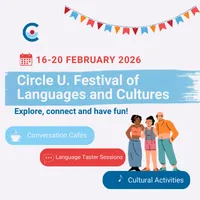
Festival of Languages and Cultures

Fostering Autonomy in Language Education: Focus on Teaching Practices
Watch the CU.mil's Open Conversations
Open Conversations are hybrid conferences addressing global challenges through an interdisciplinary perspective. Those events are open to students, academics, staff, and the public outside of Circle U.
Recurring offers

Lecture: Critical AI Language and Literacy Colloquium (CAILLC)

Seminario: Análisis del discurso del activismo en línea

Collaborative Mixed Methods Research in Applied Linguistics

DIY: Alternative Modes of Cultural Production in Modern and Contemporary Anglophone Literatures
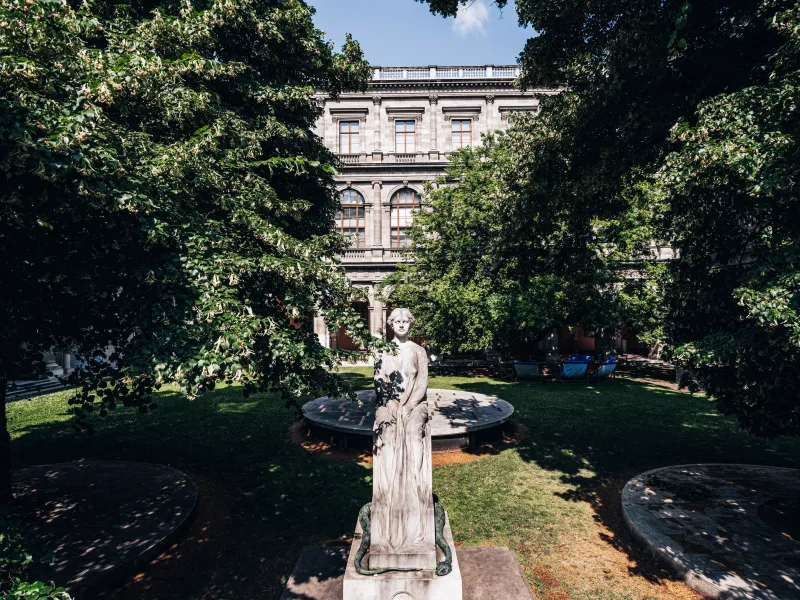
Summer school "Researching language/s in education from an ecological and mixed-methods perspective"
Language Policy in Multilingual Settings
Meet the team of the Multilingualism, Interculturality and Language Lab.
Academic Director

Prof. Fanny Meunier
- Academic Directorr for the CU.mil
- UCLouvain

Prof. Fanny Meunier
- Academic Directorr for the CU.mil
- UCLouvain
Fanny Meunier is Professor of English language, linguistics, and teacher education at UCLouvain. Her research interests and publications cover fundamental, applied, and instructed Second Language Acquisition. She is also actively involved in pre- and in-service teacher education where she promotes teacher-researcher collaboration. She has been involved in numerous international research projects. Her most recent projects deal with multi- and plurilingualism in the digital era; she is for instance actively involved in the ‘Language in the Human Machine Era’ project. She is the Academic Director of Circle U’s Multilingualism, Interculturality and Language Lab (CU.mil).
Profile page and contact details
Professor of English language, linguistics, and teacher education
Faculty of Philosophy, Arts and Letters
UCLouvain
Academic chairs

Prof. Pia Lane
- Academic Chair
- University of Oslo
Prof. Pia Lane
- Academic Chair
- University of Oslo
Pia Lane has investigated multilingualism from a wide range of theoretical perspectives, and her current project explores emotional aspects of language reclamation in Kven and Sámi communities in Northern Norway, combining narrative analysis and nexus analysis in order to analyse the experiences of new speakers of Indigenous languages. She is PI of the project Indigenous Language Resilience: From Learners To Speakers and coordinates the MA-programme in Multilingualism at the University of Oslo. She is a member of the Committee of Experts for the European Charter for Regional or Minority Languages and has served on the Norwegian Truth and Reconciliation Commission.
Profile page and contact details
Department of Linguistics and Scandinavian Studies
Faculty of Humanities
University of Oslo
Dr Ana Maria Sousa Aguiar de Medeiros
- Academic Chair
- King's College London
Dr Ana Maria Sousa Aguiar de Medeiros
- Academic Chair
- King's College London
Ana is Director of the Language Centre at King’s College London. She is a member of the Language Acts and Worldmaking Centre and co-editor of the Language Acts Book Series.
Recently, Ana has also published on the works of Marie Nimier and Amélie Nothomb and is interested in the intersection between language and identity, identity and gender. Previously Ana also wrote on the narratives of Assia Djebar and Marguerite Yourcenar.
From October 2024 Ana has been elected as the Chair of the Association of University Language Communities (AULC).
Profile page and contact details
Director of the King's Language Centre
King's College London

Assoc. Prof. Karine Paris
- Academic Chair
- Université Paris Cité
Assoc. Prof. Karine Paris
- Academic Chair
- Université Paris Cité
She's an English associate professor at the School for Applied Languages and Intercultural Studies at Université Paris Cité. She has extensive experience in teaching general English and English for specific purposes. She coordinates English courses for Master’s degree courses in communication, journalism and sustainable development.
She also works at the Language Resource Center where she designs online English courses for humanities and science students and coordinates a team of instructors. Recently she has taken part in the language working group in charge of making recommendations on the future organization of language courses and language teachers’ training at UPC to better meet students’, staff’s and faculty’s needs.
Profile page and contact details
karine.paris@u-paris.fr
School of Applied Languages and Intercultural Studies and Language Resource Center
Faculty of Social Sciences and Humanities
Université Paris Cité

Prof. Dr. Ute Smit
- Academic Chair
- University of Vienna
Prof. Dr. Ute Smit
- Academic Chair
- University of Vienna
Being an applied linguist in an English department, my research focuses mainly on English in, and around, education at the crossroads of classroom discourse, language policy, internationalisation, English as a lingua franca, disciplinary biliteracy and multilingualism. I’ve been involved in various international projects, and I’m presently the chair of the ICLHE (Integrating content and Language in Education) Association and the vice head of the international research platform #YouthMediaLife.
Profile page and contact details
Professor of English Linguistics
Faculty of Philological and Cultural Studies
University of Vienna

Prof. Dr. Dalibor Sokolović
- Academic Chair
- University of Belgrade
Prof. Dr. Dalibor Sokolović
- Academic Chair
- University of Belgrade
Dalibor Sokolović is Associate Professor at the Department of Slavic Studies at the University of Belgrade – Faculty of Philology, and Erasmus+ coordinator at the same faculty. His scientific interests include West Slavic languages, Slavic minority languages, language policies and planning, methodology and practice of foreign language teaching.
Profile page and contact details
Faculty of Philology
University of Belgrade

Prof. Dr. Ferran Suñer
- Academic Chair
- UCLouvain
Prof. Dr. Ferran Suñer
- Academic Chair
- UCLouvain
Ferran Suñer is professor of German language, linguistics and teacher education at UCLouvain. His research interests cover technology-based language learning, applied cognitive linguistics, and the use of figurative language across languages and cultures. His recent projects involve collaboration among different stakeholders in the realms of research and education, focusing on initiatives such as Teaching and learning languages online using digital tasks and Learning scenarios to support inclusive language and culture education for heterogeneous school classes. He is a co-founder of the research group Teaching and Acquiring Multilingualism and Multiliteracies (TeAMM).
Profile page and contact details
Institute for Language and Communication/Linguistics Research Unit
Faculty of Philosophy, Arts and Letters
UCLouvain

Prof. Heike Wiese
- Academic Chair
- Humboldt-Universität zu Berlin
Prof. Heike Wiese
- Academic Chair
- Humboldt-Universität zu Berlin
Heike Wiese holds the chair of German in Multilingual Contexts at Humboldt-Universität zu Berlin, after a professorship at University of Potsdam and visiting posts at Yale University and Brandeis University. Wiese is a member of the Academia Europaea and of the German Council for Migration, as well as a speaker of the Centre “Language in Urban Diversity”. She is an expert on the dynamics of multilingual settings, with foci on grammatical developments and on monolingual ideologies, linguistic discrimination and empowerment. In outreach activities, Wiese cooperates with multilingual communities, kindergartens and schools, educational policy makers and museums.
Profile page and contact details
Faculty of Language, Literature and Humanities
heike.wiese@hu-berlin.de
Prof. Michelangelo Zaccarello
- Academic Chair
- University of Pisa
Prof. Michelangelo Zaccarello
- Academic Chair
- University of Pisa
After teaching in Dublin, Oxford and Verona, Michelangelo Zaccarello is professor of Filologia italiana at the University of Pisa and held 2 Fulbright terms at Indiana U. and Northwestern (IL): his main research areas are the textual scholarship of early Italian literary texts, mainly comic verse and short stories (with critical editions of Burchiello, Pulci, Sacchetti), and digital philology. He has spent visiting terms in several European and North-American universities and is now President of ICoN academic consortium (www.italicon.education). Of his more than a hundred publications, many appeared outside Italy and Europe. Amongst his recently published books: L’edizione critica del testo letterario (Mondadori 2017), Teoria e forme del testo digitale (Carocci 2019), Leggere senza libri (Cesati 2020).
Profile page and contact details
Full Professor at the Faculty of Arts
University of Pisa

Prof. Mette Zølner
- Academic Chair
- Aarhus University
Prof. Mette Zølner
- Academic Chair
- Aarhus University
Mette Zølner is Professor of Intercultural Studies at Aarhus University (DK) since 2020. She obtained her PhD in social sciences at the European University Institute in Florence (Italy), an MA in European studies from KU Leuven, and an MA in French Studies from AU. Mette Zølner has worked at the Copenhagen Business School for more than 20 years. Her research adopts an interdisciplinary and systemic approach to interculturality in organizational contexts with a focus on how organizations and their social actors negotiate and contest meanings, identities and practices at the interface between global and local practices. She has explored these questions empirically and qualitatively, adopting a multi-level and interpretive/critical approach to studies of MNCs, SMEs and non-profit organisations in different regional contexts.
Profile page and contact details
Professor of Intercultural Studies
School of Communication and Culture
Aarhus University
CU.mil coordination team

Charlotte Peters
- Coordination team
- UCLouvain
Charlotte Peters
- Coordination team
- UCLouvain
Charlotte teaches German and English for Specific Purposes at UCLouvain’s language institute. She focuses on English for STEM and Business English, as well as Academic German and Business German. Her special areas of interest are tandem learning and teaching languages to students with specific learning needs.
Charlotte holds a Master’s degree in English and German literature and linguistics from Katholieke Universiteit Leuven as well as a Master’s in European Studies from UCLouvain. She’s fluent in German, English, French and Dutch and understands Swedish.
Profile page and contact details
Instructor for English and German
Institut des langues vivantes
UCLouvain

Colleen Starrs
- Coordination team
- UCLouvain
Colleen Starrs
- Coordination team
- UCLouvain
Colleen teaches English for Specific Purposes at UCLouvain’s language institute. She has taught, designed, and coordinated a wide variety of courses in both Bachelor’s and Master’s programmes.
Alongside her teaching and her involvement in pedagogical projects, Colleen is also an active member of her institute’s working group ‘Langues et Cultures’, which organises multilingual and multicultural events for staff and students.
Colleen’s areas of interest include the role of metalinguistic strategies in second language listening comprehension, and the impact of creative learning opportunities and cultural activities on student motivation and engagement.
Profile page and contact details
English Language Teacher
Institut des langues vivantes de l’UCLouvain