The aim of PACT-C is to deepen theoretical understanding of processes through which new collective actors striving for social change emerge in conditions of major (global and local) disruptive events such as the 2008 financial meltdown, the Covid-19 pandemic or the collapse of the railway station canopy in Novi Sad. The project is interdisciplinary and theoretical, founded upon the premise that new political actors can be formed when individual political affects become collective through a dynamic defined as “ephemeral collective affectivity”, a pre-discursive form of shared affectivity that emerges among diverse – even mutually agonistic – social groups facing pronounced uncertainty. The project’s principal outcome will be a theory of collective actor formation in conditions of crisis that contributes to the Circle U. Knowledge Hub of Democracy, by deepening our understanding of the potential of societal crises to foster the formation of new and transformative movements that transcend ossified group boundaries.
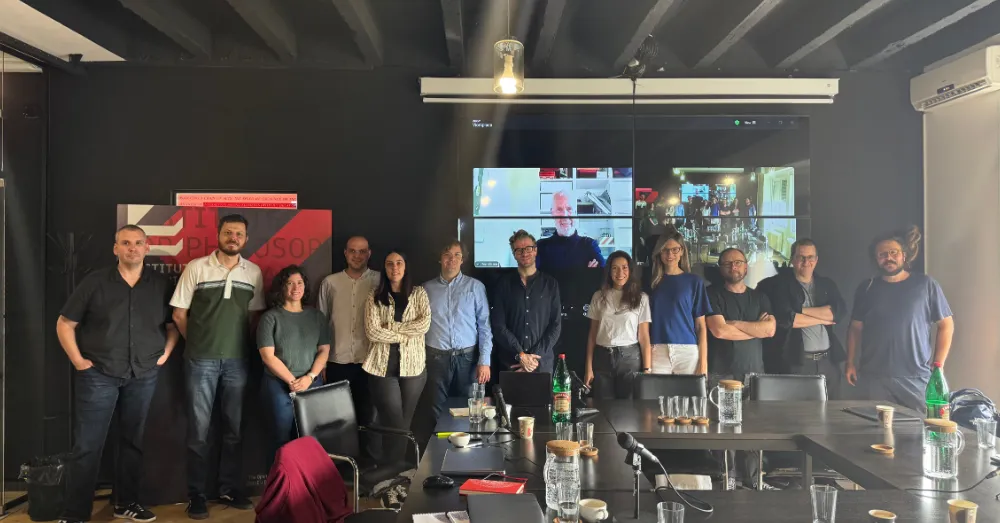
The project team from five partner institutions includes researchers with expertise on political affects, social movements, transformation of societal norms, contemporary forms of social domination and dynamics of crises. Fourteen members of the diverse research team – nine from the Institute for Philosophy and Social Theory and five from partner institutions – gathered at the Belgrade workshop (with two researchers participating online) to present their project research and conduct in-depth discussions of the working papers.
Concrete topics discussed at the workshop, diverse yet converging around the project’s principal research aim, include, among other, “Transversal Political Affects and Shared Inner Experience”, “Emotions and Empowerment in the 15M Assemblies in Madrid”, “Aesthetic Communification”, “Intuition, Affects and the Political: The Formation of (Counter)Institutions in the Aftermath of Contingent Events“ and “The Role of Collective Affectivity in Civil Repair”. The team members’ contributions should be loosely understood as components of the theory of the emancipatory potential of societal crises, which should be “assembled” over the course of the project.
In that respect, the workshop was a key step in the development of the theory, allowing researchers to interconnect their varied and complementary perspectives, and to develop a common vocabulary for mutually translating and integrating each other’s insights. An additional stimulus for collective reflection and intense debate was provided by the fact that the event took place in the midst of Serbia’s current student-led movement struggling for social change.