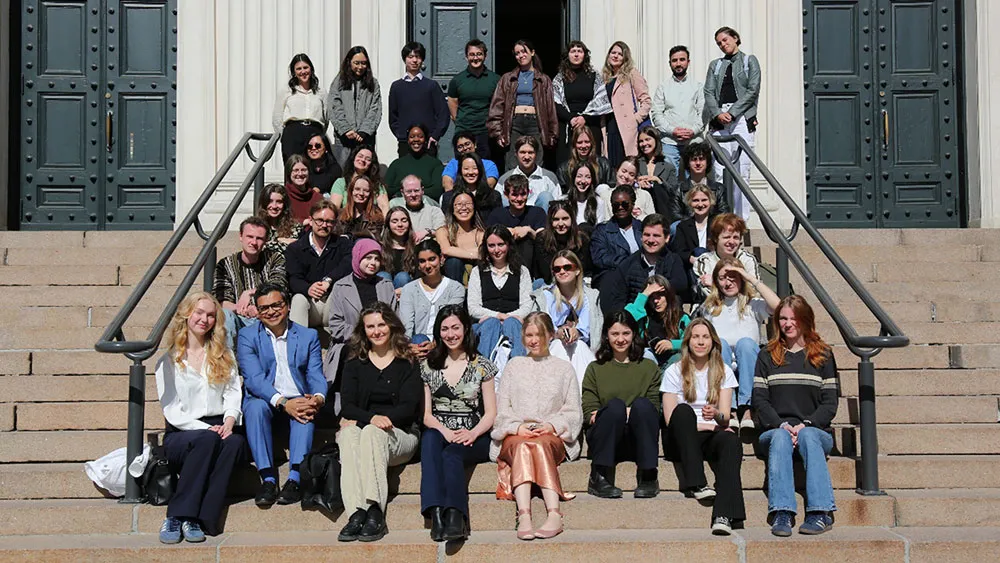
The course, titled “The Politics of Sustainable Development,” brought together students from across Europe for an intensive week of study, dialogue, and collaboration.
It was incredible to learn with students from all over the world
– Rumeysa Durmaz, Université Paris Cité
Combining lectures from leading scholars, practitioner dialogues, and extensive group work, the course invited bachelor’s and master’s students from eight European universities to examine the complicated nexus of politics, development, and sustainability. Along the way, course participants explored the messy, complicated nature of sustainable development, interrogating international frameworks and local decision-making processes alike.
The end result was the creation pan-European, interdisciplinary community of students and scholars, serving as a testament to the continued importance of internationalization in higher education.
“It was incredible to learn with students from all over the world,” said Rumeysa Durmaz, a participant from Université Paris Cité. “We had different experiences and perspectives, but we found ways to really learn from each other.”
From global goals to everyday tradeoffs
Professor Dan Banik opened the course by taking participants through the intellectual and institutional history of sustainable development, charting a path from the Brundtland Report to the 2030 Agenda. Banik challenged students to explore the promise and limitations of global goal-setting as a tool for change before exploring different avenues for financing sustainable development later in the week.

Professor Aleksandra Buha Đorđević from the University of Belgrade gave a sobering look at endocrine disrupting chemicals (EDCs) and their links to public health crises. Her lecture exposed the deeply political nature of environmental science: who gets sick, who is heard, and who is held accountable.
Bjørn Kjærand Haugland, CEO of Skift, reframed the sustainability conversation as both a strategic necessity and a national opportunity. He argued for a new Norwegian sustainability narrative—one that links green competitiveness, climate resilience, and energy security to Norway’s future in a volatile world. As Haugland highlighted to course participants, the green shift is not a burden but a chance to lead by example—transforming Norway from “best in the world” to “best for the world.”
Margherita de Candia, lecturer in political science Education at King’s College London, explored how climate policy in the European Parliament has become increasingly polarized, with the far right gaining influence and parts of the center-right backtracking on green commitments. Her lecture raised concerns about whether the EU can maintain its climate leadership amid shifting political currents.
Later in the week, students visited the Norwegian Parliament (Stortinget) for a candid discussion with Sigrid Z. Heiberg, member of parliament for the Green Party of Norway (MDG). Touching on democratic vulnerabilities, civil society engagement, and the politics of war and climate, Heiberg emphasized the need to fight for hope and democratic accountability—reminding students of the importance of continuing to fight for a better world.
In every session, students grappled with different perspectives, unique challenges, and the difficulty of translating policy into results.
Student Takeover
In the end, however, it was the students that carried the week. In one of the course’s signature features, participants worked in in groups throughout the week to develop a presentation on a topic of their choice. On the final day, each group presented their findings and designed an interactive session aimed at educating their peers on topics ranging from water privatization to Arctic cooperation.
“It was really interesting collaborating with students from all over Europe,” noted Ronan Brennan from University College Dublin. “We had different styles, but everyone took the initiative in their own way. I really enjoyed the group work.”
This emphasis on active, peer-to-peer learning reinforces Circle U.’s mission to “foster innovation, collaboration, and knowledge exchange.” It also encouraged trans-disciplinary and trans-cultural cooperation, a skill increasingly essential in addressing the global complexities of sustainable development.
Democracy in the Balance
The course concluded with a public panel discussion, Democracy in the Balance: Climate, Conflict, and the Politics of Sustainable Development. Co-hosted by the University of Oslo’s Centre for Development and the Environment and Circle U., the panel examined how participatory politics, civic engagement, and institutional design shape responses to environmental and social crises.
Climate politics has become decidedly more “messy” in recent years, noted panelist Torbjørn Røe Isaksen. As a former government minister for Norway’s Conservative Party (Høyre) and the current political editor for Norwegian news outlet E24, Isaksen was speaking from experience. His sentiments, furthermore, were echoed by de Candida, who offered a stark reminder the political stakes of European politics as far-right parties seek to leverage green policies as cultural wedge.
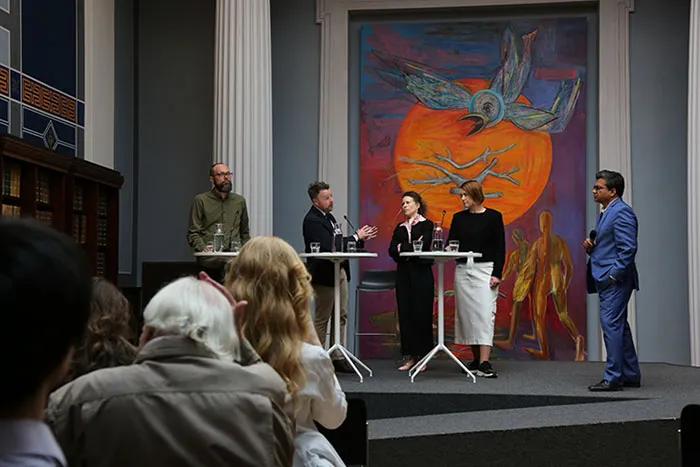
Christina Bu, General Secretary of the Norwegian EV Association, focused on a success story. While not without challenges, Norway’s transformation into a world leader in electric vehicle adoption, Bu argued, showed what is possible when policy, market, and public trust align.
Research Professor Arve Hansen from the University of Oslo, on the other hand, brought a novel, consumption-focused perspective to the conversation. He underscored the importance of understanding consumption issues and other environmental challenges as societal, rather than individual, problems.
Together, the panelists offered a layered view of climate politics—one that acknowledged democratic friction, ideological polarization, and uneven progress, but also emphasized the potential for meaningful change when public trust, policy ambition, and societal responsibility converge.
My life will change because of this course
– Rumeysa Durmaz, Université Paris Cité
A Course in Possibility
As students wrapped up their presentations and headed home, it was clear they were taking more than a certificate with them—they were returning with broader perspectives, renewed ambition, and a sense of hope.
“My life will change because of this course,” concluded Durmaz. Inspired by her time in Oslo, the Université Paris Cité student expressed that she hoped to stary a cosmetics brand that is “really, truly green.” Durmaz’s vision reflects internationalized education at its best. Participating students did not just become more knowledgeable. The learned how to navigate the “messy” politics of sustainability, how to turn academic insights into real-world progress, and how to collaborate with people with different perspectives and experiences.
While the course may have only lasted a week, it built a community of pan-European changemakers, fostering an enduring spirit of internationalism, learning, and collaboration.