A course rooted in evidence
Rather than cataloguing the many ways development can go wrong, the course turned its attention toward what has genuinely improved human well-being. Drawing on empirical research and real-world case studies, students examined successful interventions across a range of sectors, from agriculture and healthcare to governance and environmental protection.
Lectures ranged from cardiovascular disease prevention in low-income countries and health promotion with people living in prison, to African-led efforts to integrate climate and health into free-trade agreements. The opportunities and risks presented by AI in strengthening democracy and development were discussed alongside the role of local firms and inclusive growth. Students were also encouraged to grapple with failure by examining cases where well-intentioned programs fell short and asking what lessons could be drawn.
The overarching topic throughout this week was to rethink what “success” entails within the scope of development. As well as looking at initiatives employed across the world, it is central to reflect on what actually works and is felt at a local level. The lecture series ended on Friday with the topic ‘Learning from Failure and Moving Forward’.

Collaborative learning in practice
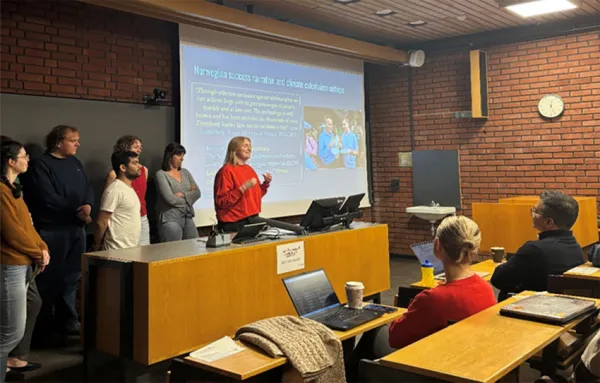
One of the defining features of LEAD was its emphasis on student-led learning. Throughout the week, participants worked in interdisciplinary groups to research and develop presentations on development topics of their own choosing. On the final day, each group presented their work and facilitated an interactive session for their peers, effectively turning the classroom into a space of shared teaching as well as shared learning.
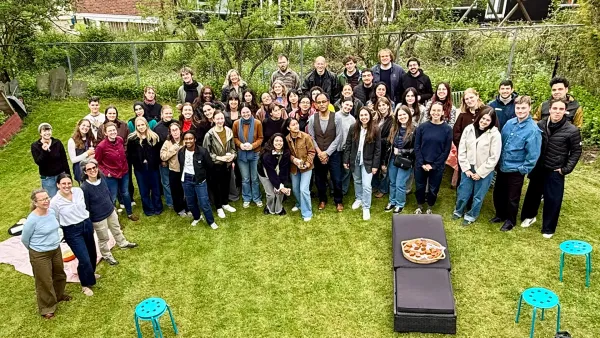
The experience of working across national and disciplinary boundaries was frequently mentioned as one of the highlights of the week. Students describe the social aspect of the course and the opportunity to connect with other European peers as one of the most enjoyable parts of participating in LEAD.
What works, when, how and why: Promising practices for a more hopeful future
The Open Conversation held at Domus Bibliotheca brought together lecturers, students and external participants to reflect on the course’s themes in an open and interactive format. The Open Conversation brought together perspectives from political science, global health, and law to explore the political, institutional, and historical factors that help explain why some interventions succeed while others do not. The discussion considered how ideas of hope can be grounded in empirical evidence rather than wishful thinking. Participants reflected on how more balanced narratives can enrich both academic inquiry and public debate. The aim is not to deny crisis, but to better understand the possibilities for meaningful change.

Bringing students together from across Europe
The Circle U. Alliance consists of nine European universities working together to offer intersectional courses on relevant topics in Democracy, Health and Artificial Intelligence. A core element unique to the BIPs is that they allow students to spend a week at one of the partner universities, exploring the city and creating new friendships across borders.