The programme “How to do European History? Current Approaches and Controversies” started with six preliminary lectures online throughout April and May, during which we learned about topics such as narratives of war and peace and different, often conflicting, geographical perceptions in European history. These topics and concepts were later revisited by several students during their presentations on the current state of their MA thesis projects in Oslo.
Europe – as an idea, space, or historical concept – can be rather abstract and difficult to define. I was therefore grateful for the opportunity to learn more about different perceptions of Europe throughout history and from the perspectives shared by the participating students and professors.
Adam Pannwitz, Master's student at Humboldt-Universität zu Berlin
It was particularly interesting to see how the examination of historical narratives served either as a point of reflection for some of the students’ writing process or as a theoretical foundation for their research – which highlighted the impact of the lectures. The online sessions also allowed us to begin the process of getting to know each other – at least digitally – before we eventually had the opportunity to continue both this and our learning process in person in June.
Exploring history and perspectives on site
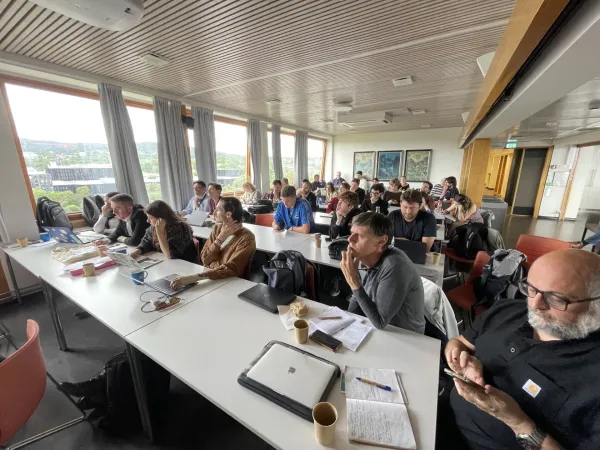
Once in Oslo, we attended lectures on Norwegian history, presented the content and writing process of our own MA thesis projects and gave each other feedback. We also explored history on site, visiting places such as the Oslo City Archives and the National Museum. Here we learned more about Norway’s past, particularly that of the Sami people. It was especially fascinating to learn about their traditional way of life and to be able to step inside a Goahti, a traditional Sami dwelling.
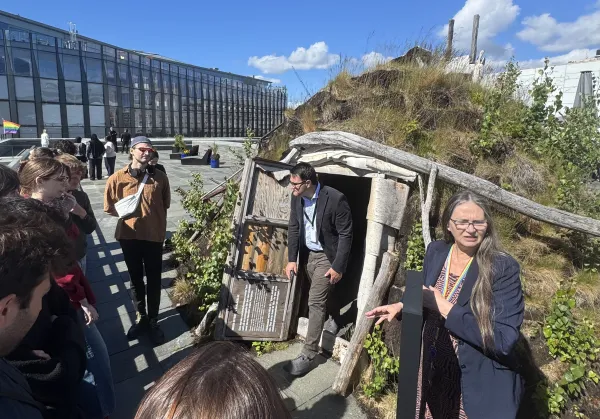
To top it all off, our social activities didn't end when the daily programme was over. We also took matters into our own hands by exploring Oslo in small groups. Along the way, we got to know each other on a more personal level, exchanged our perspectives on European history, shaped by our diverse cultural backgrounds, and eventually formed new friendships. These conversations and friendships became one of the defining aspects of the programme.
My recommendation: Apply for the next edition
In my opinion, the Circle U. European History Summer School offers a particularly valuable opportunity for master’s students in history who are interested in exploring the discipline in an interconnected setting between and beyond national historiographies, based on cultural and academic exchange. It introduces a variety of themes and methodologies and provides a unique opportunity to receive feedback from both professors and fellow students. Personally, I benefited greatly from this summer school, and would recommend it wholeheartedly.
Founded as part of the Joint Master’s programme in European History by the UNICA network, the annual European History Summer School brings together students and professors from its nine partner universities. This year, thanks to Circle U., they were able to welcome more than 30 participants from a total of 11 universities to Oslo.