Organised by Université Paris Cité within the Circle U. alliance, the event brought together leading experts from Belgrade, Paris and Louvain-la-Neuve, who shed light— from different perspectives—on the increasingly complex interconnections between climate change, water availability, and global food and energy security. The speakers were Prof. Dr Xiaofeng Guo (Université Paris Cité), Prof. Dr Marnik Vanclooster (UCLouvain), and Prof. Dr Đorđe Čantrak, Head of the Department of Hydraulic Machines and Energy Systems at the Faculty of Mechanical Engineering, University of Belgrade.
Climate change is increasingly reshaping the way humanity understands, uses and manages water. Although the term “water scarcity” is often used, experts warn that the underlying problem is far more complex: the total amount of water on the planet remains the same, but its availability is becoming increasingly unstable across space and time.
“This very instability is the key to the modern water crisis,” emphasised Prof. Xiaofeng Guo. Although about 71% of the Earth’s surface is covered by water, most of it is saline, while freshwater makes up only a small and fragile part of the global system. “In practice, people rely most on surface sources of freshwater, and these are precisely the most vulnerable part of the system,” he pointed out.
The occurrence of simultaneous droughts and floods is not a contradiction, but the result of the same climate process. Climate change is also altering the functioning of the hydrological cycle, leading to less frequent but more intense precipitation. An additional problem is glacier melting, which changes the seasonal distribution of water. “Water exists, but not when it is needed,” Guo stresses.
In addition to quantity, water quality is becoming increasingly important. Higher temperatures favour the growth of bacteria and algae, which is why water is becoming not only a resource issue but also a safety concern. At the same time, urbanisation and overexploitation of groundwater further strain the system. The problem extends to the energy sector, as power plants depend on water for cooling and often have to reduce production during heatwaves. Similar challenges are faced by urban cooling systems and data centres, which further increase pressure on water resources.
Guo concludes that new solutions are needed, ranging from green infrastructure in cities to technologies for extracting water from the atmosphere, but that these are still insufficient to meet global needs. According to him, the fundamental challenge of the modern era is not the lack of water, but its increasing mismatch with society’s needs.
Prof. Dr Marnik Vanclooster focused his lecture on the link between climate change, water, and food production. “Food production depends on the availability of light, heat, and water, with water being essential both for plant growth and for the transport of nutrients,” he pointed out. However, the global distribution of these resources is uneven, and regions with water scarcity—such as the Middle East, parts of Asia, and Australia—are the most vulnerable.
Referring to the IPCC, he notes that global warming scenarios of 1.5 to 4 degrees do not only imply rising temperatures, but also changes in soil moisture, which directly affect yields. Research by his team in Central Africa shows an increase in drought intensity after 2010 and a strengthening of the impacts of climatic phenomena such as El Niño and La Niña, along with a clear decline in vegetation and NDVI index values, indicating worsening conditions for plant growth.
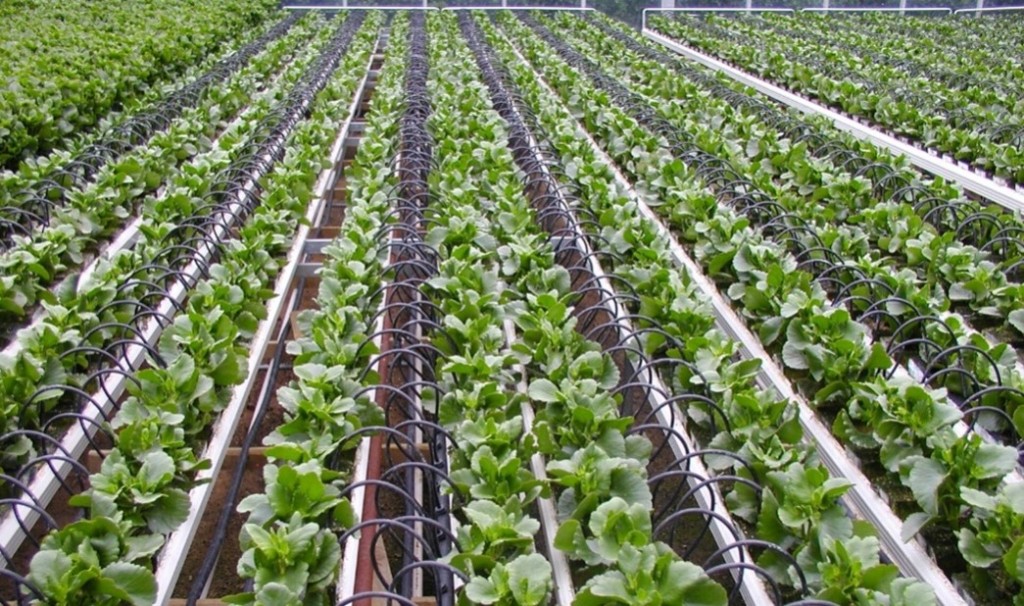
One of the key solutions, according to him, is irrigation, which already secures a significant share of global food production. Today, about 69% of global water consumption is used in agriculture, while 20% of irrigated land produces as much as 40% of total output and 60% of cereals. There are different irrigation systems—surface irrigation, sprinkler systems, and drip irrigation. “Efficiency varies from 40 to 60% for surface irrigation, while drip irrigation allows for much more precise use of water directly in the plant’s root zone,” Vanclooster explains.
According to FAO projections, the area under irrigation and the use of freshwater in agriculture are expected to continue increasing. “Farmers must adapt to new conditions, but it is also essential to align policies, laws and institutions,” this expert emphasises.
As a solution, he highlights the concept of climate-smart agriculture, which enables stable production with a lower environmental impact and better adaptation to climate extremes. In this context, he cites rice production as an example: it feeds billions of people but is very water-intensive and responsible for about 25% of methane emissions in agriculture. One of the solutions that is increasingly being explored is alternate wetting and drying—fields are not kept continuously flooded but are periodically allowed to dry. The goal is to maintain yields, reduce water use and lower methane emissions.
“We already have technical solutions in place, but the key question is how quickly we will adapt to the new climate conditions,” Vanclooster concludes.
Prof. Dr Đorđe Čantrak from the Department of Hydraulic Machinery and Energy Systems at the Faculty of Mechanical Engineering, University of Belgrade, spoke about the potential of hydropower as one of the oldest and most significant sources of renewable energy, as well as the rich tradition in this field preserved in Serbia.
“Hydropower has a long tradition and remains one of the most reliable sources of clean energy,” he said, emphasising that facilities are designed for specific locations, with careful consideration of both technical and environmental requirements. This means that modern hydropower plants must be designed to ensure optimal operation of hydraulic turbines and maximum efficiency in water use, while also maintaining ecological flows and providing fish passages.
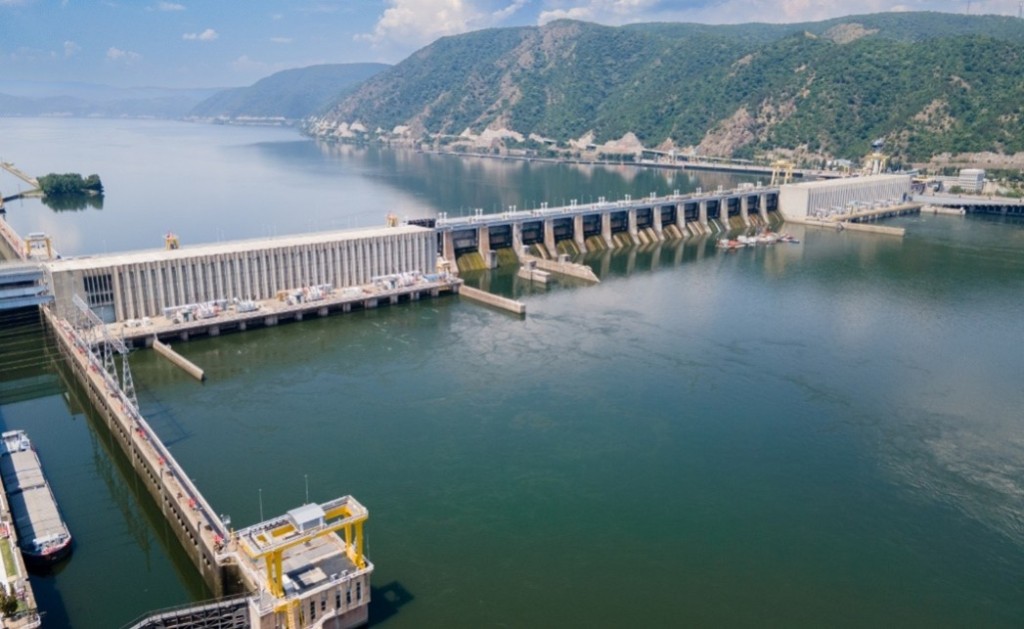
According to him, hydropower has three key roles: generating electricity, stabilising the power grid, and providing a sustainable, long-term energy source at low cost. “Hydropower plants last between 65 and 85 years, and this lifespan is expected to be even longer in the future,” said Čantrak. He notes that there are different types of facilities—storage, diversion, and pumped-storage plants—as well as various types of turbines, including Kaplan, Francis, Pelton, and many others. “About two-thirds of all installed hydraulic turbines worldwide are of the Francis type, which shows how dominant this technology still is,” he adds.
Speaking about modern energy systems, Čantrak highlighted that in Europe in 2024, around 47% of electricity was generated from renewable sources, with wind contributing about 39% and hydropower approximately 30%. As he explained, hydropower plants—especially pumped-storage ones—function in modern systems as a kind of “energy battery” for the grid. According to him, their efficiency ranges between 70% and 80%, and they play a key role in stabilising the grid, increasing energy security, and reducing CO₂ emissions. “Today, they are one of the most important tools for integrating renewable energy sources and protecting the environment,” Čantrak emphasised. “In this system, we are essentially conserving water, because we use it multiple times and in different modes,” he added.
Discussing the future of the sector, Čantrak stated that the next decade will be marked by the modernisation of existing hydropower plants and the introduction of advanced technologies. “A reorganisation and optimisation of existing systems is expected, as well as the introduction of artificial intelligence in resource management.” The operation of hydropower systems is closely linked to the regulation of waterways, irrigation, flood prevention, tourism, and other sectors.
In the final part of his presentation, he also addressed the current social context in Serbia. “Students and the academic community in Serbia, together with citizens, have for the past 17 months been participating in activities aimed at combating corruption, as well as advocating for various environmental protection issues, especially concerning water,” said Prof. Dr Đorđe Čantrak.
“Mechanical engineers against the machinery,” as one of the student slogans goes, symbolically points to resistance to what he described as systemic problems that threaten both people and natural resources. He identified mining in Serbia as a key issue, particularly the planned exploitation of lithium deposits in the Jadar Valley by the company Rio Tinto. These areas contain significant water resources that could be seriously endangered by mining activities.
At the end of his presentation, Prof. Čantrak emphasised that the role of science and universities is crucial in preserving resources for future generations. “This is not only a technical issue, but also a matter of responsibility towards society and the environment,” he concluded. He also pointed out that the Circle U. alliance has on several occasions supported universities and students in Serbia in their just struggle.
The webinar participants agreed that technological solutions—such as climate-smart agriculture, vertical farms, urban greening, and advanced systems for water treatment and storage, including large underground reservoirs for rainwater collection—represent a key step towards sustainable management of water and energy resources. At the same time, they stressed that their full implementation and long-term impact depend on strong institutional and political will to carry out systemic changes in water protection and climate adaptation.
Recording of the lecture is available at the Youtube Channel of European University Alliance Circle U. at the following link: https://www.youtube.com/watch?v=KTBLBHwbaZ8