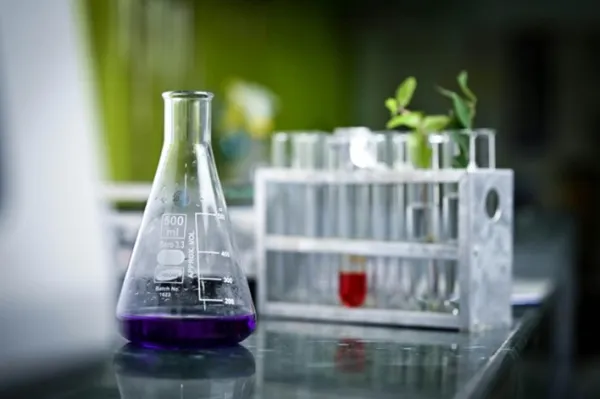
This workshop is designed for PhD students, postdoctoral researchers, and lifelong learners interested in making science more sustainable.
Focused on the environmental footprint of research, it introduces participants to sustainable lab practices, carbon footprinting, life cycle analysis, stakeholder engagement, and the design of future-ready laboratories.
Offered between October 15 and December 17, 2026, this blended course combines two online sessions with a five-day in-person intensive at UCLouvain. Through hands-on exercises, lab visits, and science communication training, participants gain the knowledge and tools to integrate sustainability into their own research environment — because when every scientist acts as a climate ambassador, change becomes continuous and far-reaching.
Learning outcomes
By the end of the workshop, participants will be able to:
- Understand climate science and planetary boundaries and relate them to research activities.
- Recognise the environmental impact of research through carbon and other footprints.
- Apply sustainability frameworks and tools (CSRD, double materiality, LCA, carbon accounting) to research contexts.
- Engage stakeholders and manage change to implement sustainable practices in academic environments
- Adopt sustainable laboratory practices including energy efficiency, procurement strategies, and Green Chemistry principles.
- Collaborate to design innovative, future-ready labs and propose more sustainable experimental protocols.
- Communicate sustainability strategies effectively through group presentations and actionable plans.
Admission to the course
To apply for this workshop, please complete the registration form, which will ask you to submit the following:
- A short motivation statement (either a 2–3 minute video or a few written lines) explaining why you want to join the workshop and briefly describing your lab experience
- A topic selection for group work, along with confirmation that you have read the corresponding course material. Available topics are: Lab Protocols, Mobility in Research, Footprint Computing, Footprint Lab Equipment, and How to Embrace Change.
These two elements must be submitted through the registration form to complete your application. Places are limited to 40 participants, so early application is encouraged.
Examination
Participants will be assessed on a pass/fail basis through a group presentation delivered at the end of the workshop.
For questions regarding the programme and content of this opportunity, please send an e-mail to sustainable-labs-workshop@uclouvain.be
Additional information
The online sessions will take place on the following dates:
- 15 October, 2.00 pm to 6.00 pm
- 17 December, 2.00 pm to 6.00 pm
Day 1 — Introduction to climate change and the environmental footprint of research
Day 2 — Communication, stakeholders and change management to make research fit for the future
Day 3 — Calculation of carbon and other footprints of research; life cycle analysis of lab products
Day 4 — Sustainable lab practices — from biology to chemistry
Day 5 — Design of the lab of the future
Beyond the daily programme, participants will also take part in lab and company visits, social gatherings and group exercises, and dedicated sessions on crafting presentations to motivate others to join sustainability efforts.
Check the detailed programme.
Throughout the workshop, participants will benefit from the expertise of researchers and specialists from various partner universities within the alliance, as well as invited experts from outside the alliance.
- Jean-François Rees, UCLouvain
- Christa Schleper, Jeroen Dobbelaere, Melina Kerou, University of Vienna
- Humboldt-Universität zu Berlin
- Gabrielle Samuel, King's College London
- Riet Van de Velde, UGent
For any questions regarding the programme and content of this workshop, please write to sustainable-labs-workshop@uclouvain.be
Funding
- No participation fees
- Participants are expected to cover their travel, accommodation, and evening meals.
- As this course is organised as a blended course within the Erasmus+ framework, participants may apply for a grant through their home university, in accordance with their institution’s rules.
Please contact the Circle U. office at your home university:
-
Aarhus University: aarhus@circle-u.eu
-
University of Belgrade: Nikola Savić – nikola.savic@rect.bg.ac.rs
-
Humboldt-Universität zu Berlin: circle-u.mobility@hu-berlin.de
-
King’s College London: circle-u@kcl.ac.uk (Erasmus+ funding not available; internal funding may apply)
-
UCLouvain: infocircleu@uclouvain.be
-
University of Oslo: oslo@circle-u.eu
-
Université Paris Cité: circleu.iro@u-paris.fr
-
University of Pisa: circleU.erasmus@unipi.it
-
University of Vienna: circle-u@univie.ac.at