Goal of the format
Academic Matchmaking is conceived as a recurring Circle U. format, organised by the Circle U. Teaching & Innovation Lab (CU.til): it brings academics from across the alliance together, helps them find potential partners, and supports the emergence of new international and interdisciplinary educational initiatives. Beyond networking, the UCLouvain edition put a particular emphasis on learning by doing: participants didn't just hear about internationalisation and educational collaboration, they went through a structured course-design process themselves.
Over the two days, matchmaking, playful learning activities, pedagogical inputs and a Design Thinking-based Design Sprint took participants progressively from first encounters and shared interests towards concrete educational concepts. The event also aimed to help participants better understand the Circle U. ecosystem, and the pedagogical and practical sides of developing international education: formats, pedagogical approaches, multilingual and intercultural teaching, institutional support, funding and implementation.
A playful and hands-on approach
Several activities introduced a playful dimension, helping participants get to know Circle U., explore international educational formats and build a common vocabulary before starting their own design work. The Circle U. Multilingualism, Interculturality and Language Lab (CU.mil) contributed tools for designing learning experiences in multilingual and multicultural contexts, including the Language Compass and its AI Companion. This also helped create a very open, informal atmosphere, with participants from different institutions and disciplines experimenting and thinking creatively together.
From matchmaking to an implementable educational concept
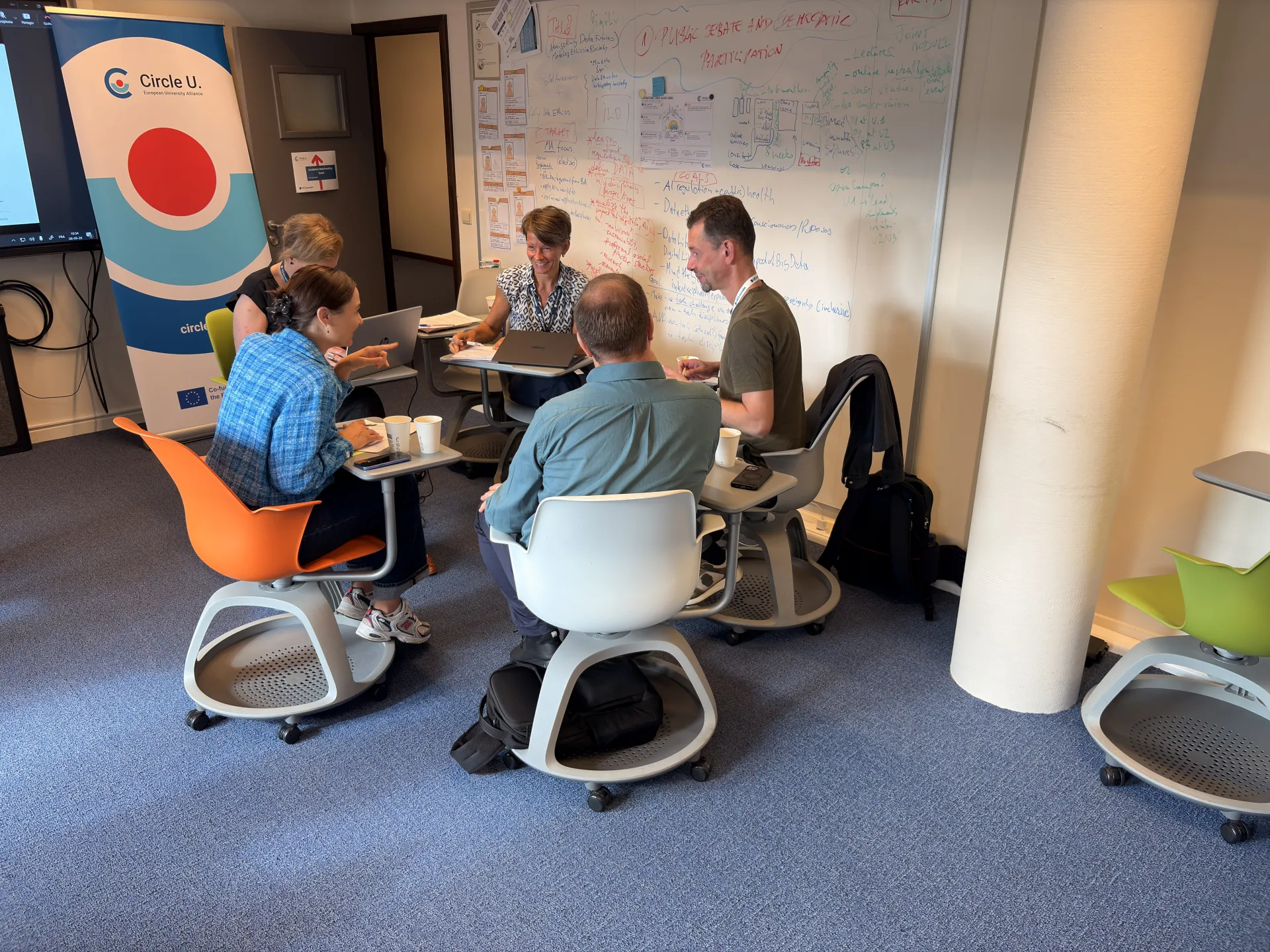
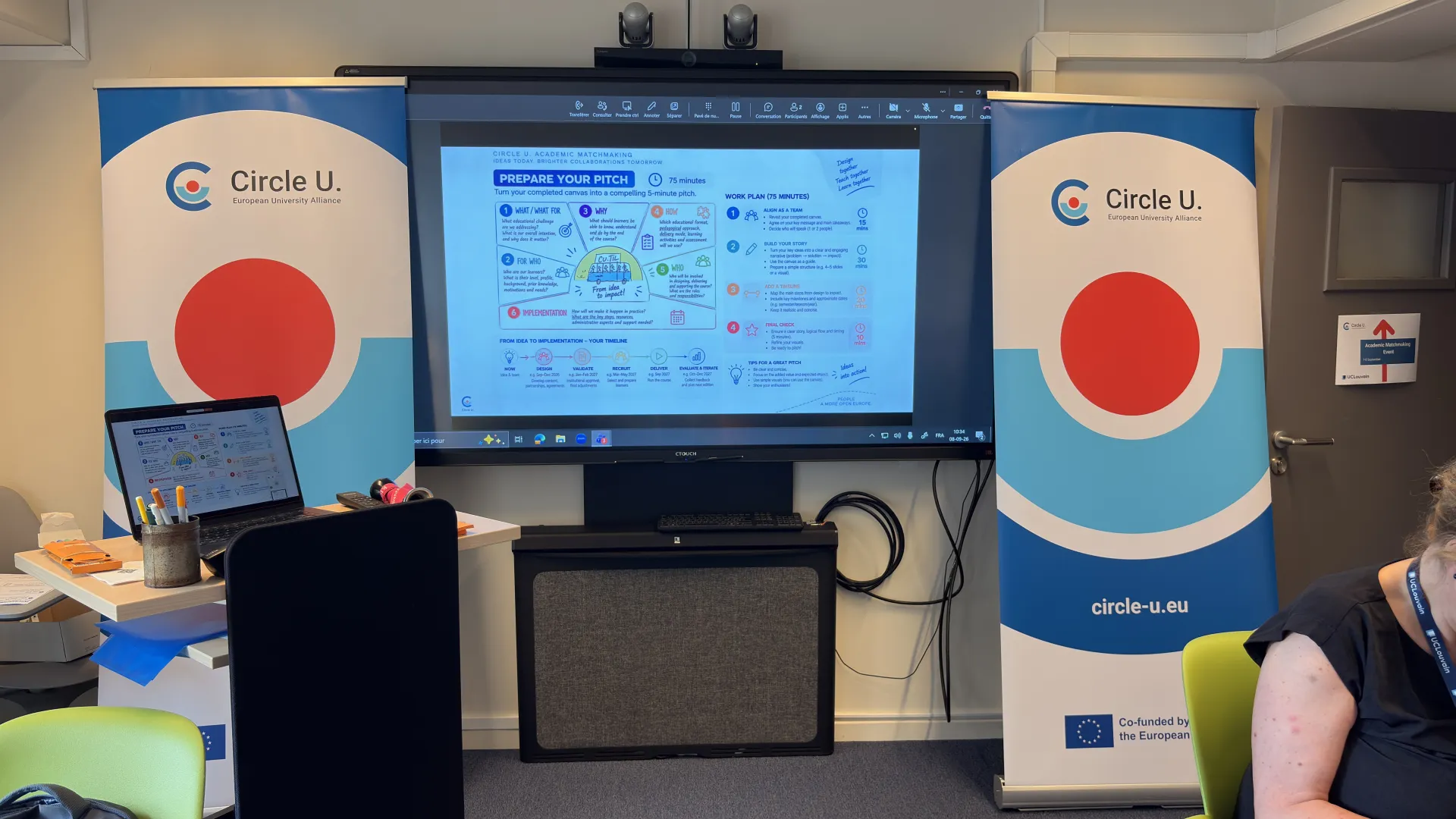
Matchmaking was followed by a facilitated Design Sprint adapted specifically to international course design. Working in interdisciplinary teams, participants started from the educational challenge they wanted to address, their target learners and intended learning outcomes, before moving on to pedagogical approaches, formats, delivery modes, learning activities, assessment, partnerships and implementation. Teams used an International Course Design Canvas developed for the event, gradually turning an initial shared interest into a structured educational concept: going beyond ideation to think about timelines, funding, administrative requirements and sustainability.
The event ended with teams pitching their emerging concepts and getting feedback. Participants left Louvain-la-Neuve not just with new contacts, but with a shared project, an early roadmap, and partners to keep developing it with. CU.til will continue to offer pedagogical support, while the Open Campus and institutional Circle U./international offices can help teams move towards implementation.
Three projects emerged from the UCLouvain edition
DIGITIX – Public Debate and Democratic Participation
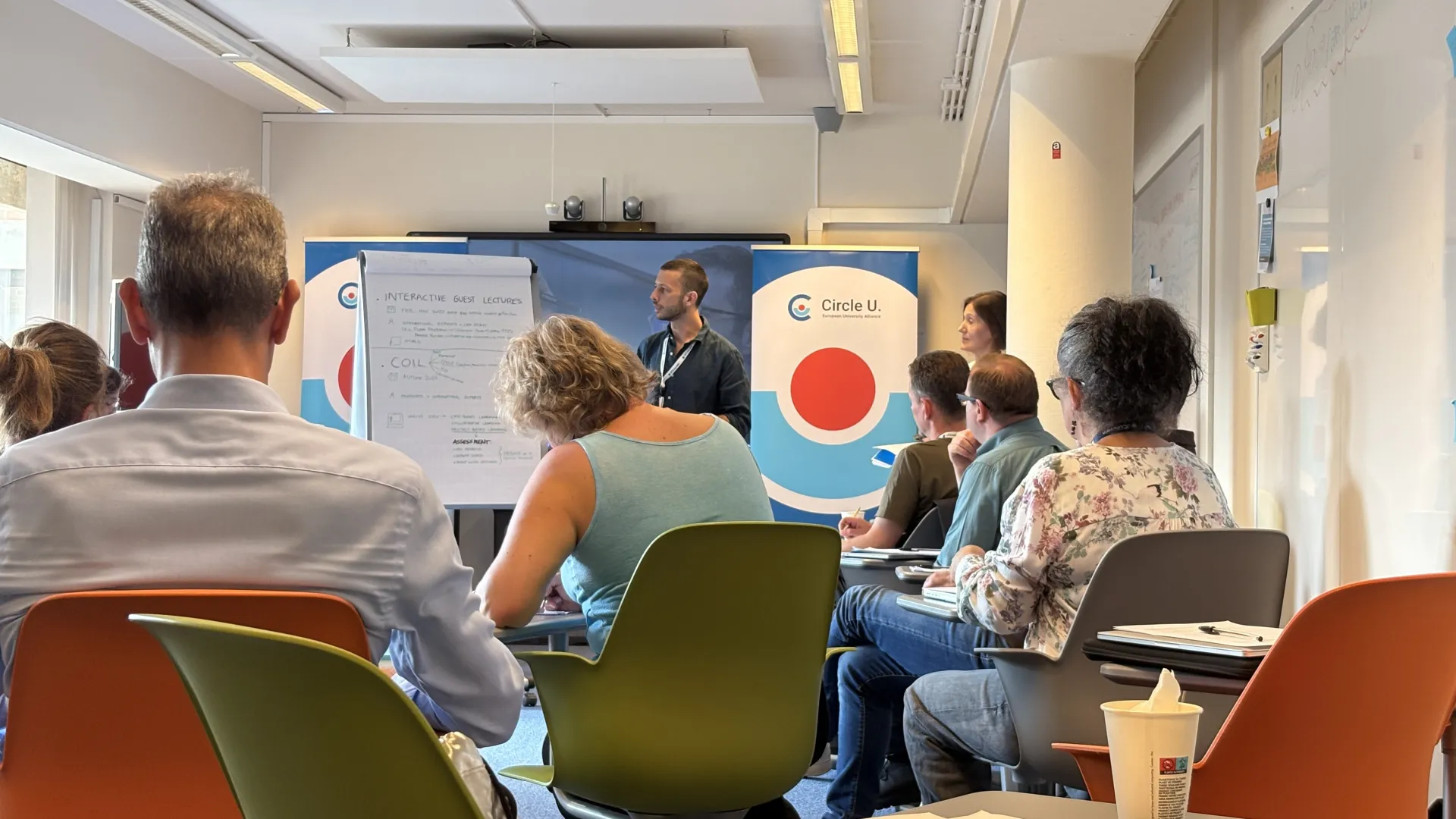
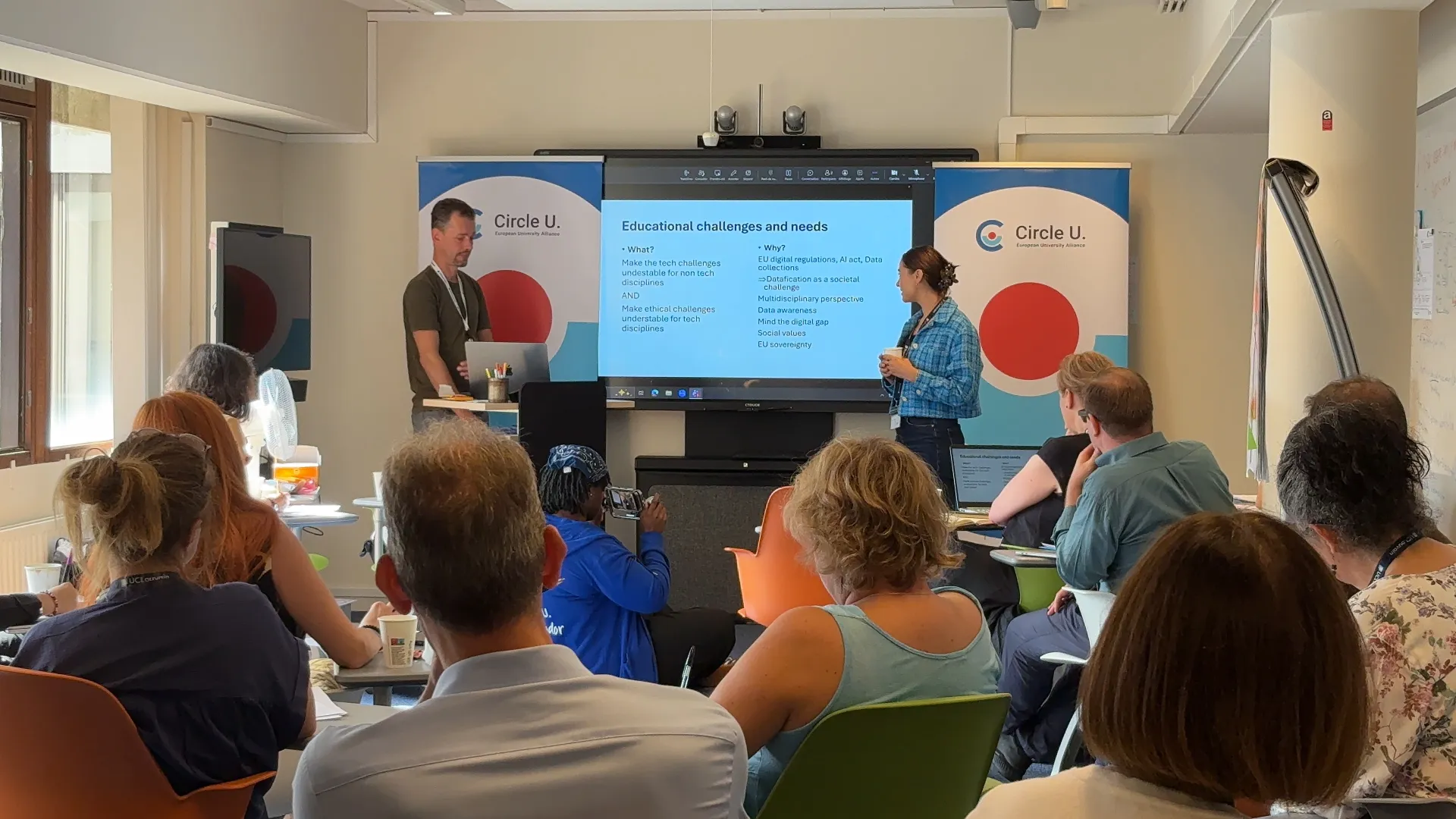
An interdisciplinary initiative looking at AI regulation, data ethics and data collection, data literacy, the societal impact of big data, European technological sovereignty, and how technological development relates to social values. One aim is to bridge technical and non-technical disciplines and help participants engage critically with contemporary digital challenges. The team is thinking of starting with interactive guest lectures and case studies, possibly developing into a COIL and later exploring formats such as hackathons.
Living Poets Society
A strongly interdisciplinary educational exchange bringing together perspectives relevant to future teachers, medical doctors and managers. The concept sits at the intersection of pedagogy and poetry, narrative medicine and Theatre of the Oppressed, using creative pedagogical approaches to explore identity-building and the rehumanisation of society. The emerging model includes guest workshops and teacher mobility, bringing different disciplinary and pedagogical traditions into dialogue.
Migration in (e)motion
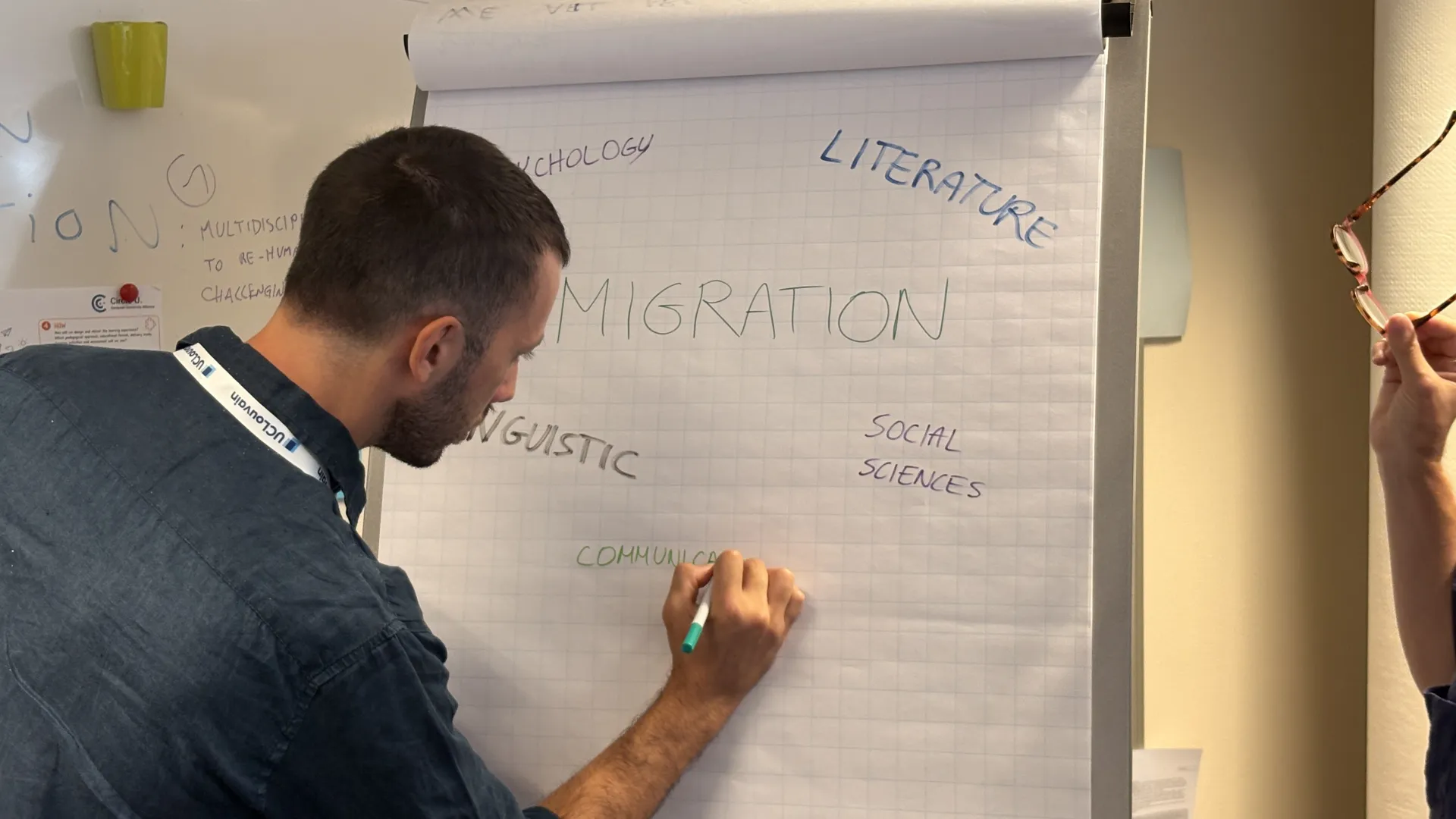
An interdisciplinary project addressing migration, post-truth and the human dimensions of migration, with a focus on cultural sensitivity and critical thinking. It's aimed at advanced Bachelor's students from different disciplinary backgrounds. The team is considering a progressive model, possibly starting with interactive international guest lectures and later moving towards a COIL format.
These projects are, of course, still very much emerging concepts - best seen as illustrations of what came out of the Design Sprint rather than finalised courses.
More than three course ideas
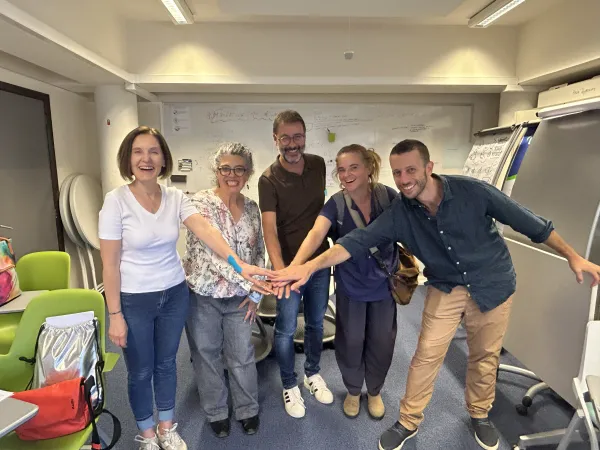
One of the strongest aspects of the two days was the atmosphere: the format made room not just for project development, but for genuine new relationships and team spirit across institutions and disciplines. The mix of structured facilitation and informal interaction created a particularly creative, collaborative environment.
The longer-term goal isn't only to generate new courses, but to strengthen academics' ability to design international education, navigate the Circle U. ecosystem, and start future collaborations on their own.
Check out some photos from the Academic Matchmaking event at UCLouvain in the gallery below!
Gallery