The state of the world increasingly demands that students not only understand theory but also learn to apply their knowledge to complex problems that cross disciplinary boundaries. This requires the courage to step outside familiar frameworks and to communicate across fields, learning to translate one’s own expertise while remaining open to the insights of others. This semester, we participated in the Science Matters Seminar, an interdisciplinary course designed to bridge the gap between academic theory, scientific rigour and artistic practices.
The course was led by:
- Sarah Hager a history and philosophy of science Doctoral candidate in the Global Studies programme at Humboldt University in Berlin
- Jonathan Weitzman a professor in Genetics and Epigenetics at Université Paris Cité
- Adnan Balcinovic an artist and researcher at the University of Applied Arts in Vienna and doctoral candidate at the Mozarteum University Salzburg.
"As a group, we witnessed the following shared journey: from early uncertainty to the trust shown in the final project. The experience was captured as a multicultural, multilingual, and interdisciplinary exchange that connected people, ideas, and emotions across borders."
Aimée KOHN, Çise AYHAN and Jovana RAPAIC
The Science Matters Seminar stands as a demonstration on how collaborative skills and critical thinking can be strengthened in environments where disciplines meet, overlap, and learn from one another.
Curriculum Design, Goals and Impressions
The foundational objective of the Science Matters Seminar was the mapping and translation of complex scientific knowledge through artistic research. The curriculum was structured around the challenging journey of interdisciplinary applications, first letting each person introduce themselves through the question “Who do I enter as?”. This opening round invited students to introduce themselves beyond disciplinary labels, making space for self-definition, role-play, and experimentation.
This moment was a period of oscillation - moving between self-doubt and discovery as participants positioned their own backgrounds alongside those of their peers while trying to remain grounded in what felt authentic. As the seminar shifted into its first production phase, where notes were shared and ideas began to take shape collectively, those initial insecurities gradually softened: the space became one where ideas could be rearranged, reworked, even rewritten by others. A place where even unfinished ideas were welcomed.
What initially felt like territorial fear - seeing one’s “little flower” changed by someone else - gradually transformed into trust as participants recognized how contributions could grow through collective handling. This process revealed the productive instability of the “inter” in interdisciplinarity: a transitional, relational zone where boundaries blur, ego loosens, and something shared can emerge.
These periods of reflection and production were complemented by a series of lectures that broadened the group’s sense of what knowledge can be. The sessions ranged from discussions on multiplicity to insights into how discoveries in fields such as epigenetics have reshaped scientific understanding. Several researchers also shared their own paths into interdisciplinary work, offering concrete examples of how crossing boundaries can lead to entirely new fields of inquiry.
The Collaborative Learning Experience
The seminar’s true strength lay in its dynamic, student-led pedagogy. Rather than traditional lectures, the learning environment relied on discussions and continuous, constructive peer review sessions The mentor’s role was not to lecture, but to serve as a consultant—offering guidance, facilitating team cohesion, and providing support for technical or strategic roadblocks. The students consistently rose to the occasion, showing remarkable resilience.
Notable challenges in such an endeavour involve the difficulty of navigating collective processes, especially online, the uncertainty about expectations when leaving one’s field or engaging in something new. Many students also recognised a broader cultural pattern within academia: that risk-taking can feel unsafe, particularly for those trained in highly scientific environments.
Crucially, the collaborative structure fostered a genuinely supportive peer environment. The students engaged with one another proactively and generously, demonstrating a striking level of maturity and a strong sense of ownership over their learning process.
Measurable Outcomes and Skill Transfer
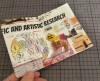
By the conclusion of the course, the students, working in small groups, had produced their own knowledge maps, which were brought together in one collective map, taking on the form of an artistic publication. This was presented at the Circle U. Poster Session during the 5th Anniversary celebration in Vienna in November 2025. Students gained hard skills in data visualization, material application, and research communication, while the focus on interdisciplinary work heavily developed soft skills like empathy, persuasive interpretation, and resilience in unfamiliar conceptual territory.
Conclusion
The Science Matters Seminar demonstrated how interdisciplinary encounters can transform uncertainty into creativity, and individual expertise into collective insight. By engaging deeply with unfamiliar perspectives, students learned not only to communicate across fields but also to rethink the boundaries of their own disciplines. The seminar’s emphasis on curiosity, collaboration, and reflective practice fostered a learning environment in which risk-taking felt possible and knowledge became a shared endeavour. Ultimately, the course affirmed that when scientific rigor, artistic exploration, and critical inquiry meet, they open pathways to forms of understanding that no discipline could generate alone.