This master programme aims to provide students with an in-depth understanding of the current challenges that European democracies must face (such as climate change, economic inequalities or migration) as well as with insights from multiple disciplines addressing the formal and informal aspects of decision-making such as political science, law, history, and economics.
The programme is organised by three partner institutions:
- UCLouvain, Brussels, Belgium
- Humboldt-Universität zu Berlin (HU), Berlin, Germany
- Università di Pisa (UNIPI), Pisa, Italy
Students will receive a multiple degree awarded jointly by the partner institutions upon successful completion of the master programme, along with a diploma supplement issued by those institutions.
Programme
All students spend the first semester of the first year of the master's in UCLouvain. In their mobility schemes, students should spend a teaching semester in at least two different partner institutions. It is also possible to spend a teaching semester in each of the three partner institutions.
Students can also spend one semester abroad in one of the other Circle U. universities (non-partner institutions), provided that specific agreements within the Circle U. alliance have been reached or by using Erasmus exchange opportunities among Circle U. universities. The last semester (Q4) is dedicated to writing the master's thesis. To write their master's thesis, students must choose one of the different partner institutions where they have already spent at least one semester during the master's programme.

Detailed programme per semester
The first semester takes place at UCLouvain where students must follow these classes:
- Political History of the EU (5 ECTS)
- Economic History of the EU (5 ECTS)
- EU Legal System & Political System (15 ECTS)
- EU Advocacy Training (5 ECTS)
In their mobility schemes, students should spend a teaching semester in at least two different partner universities.
Therefore, they will spend their second semester (30 ECTS) in one of the partner universities chosen from:
At UCLouvain, students will select these classes:
- EU Trade policy (5 ECTS)
- Digital Economy in the EU (5 ECTS)
- Internal Market & Competition Law (5 ECTS)
- Rule of Law and Fundamental Rights (5 ECTS)
- EU Gender and Non-discrimination Policies (5 ECTS)
- Seminar Designing and Managing EU-funded Projects (5 ECTS)
At UNIPI, students must follow these classes:
- International Law and Law of International Spaces (9 ECTS)
- Political Thought in the Age of Globalisation (6 ECTS)
- EU external action and the challenges of the EU enlargement Institutional Law (3 ECTS)
- English as a foreign language (6 ECTS)
- One optional course (6 ECTS) to select from:
- Economics;
- Political Science;
- Law and International History
At HU, students will take courses belonging to the following modules:
- Vocational Module (5 ECTS)
- Social Transformations and Economic Change (5 ECTS)
- Foreign Policy (5 ECTS)
- one elective module:
- Comparative Government (15 ECTS)
- Global, European Politics (15 ECTS)
- Sociological Issues (15 ECTS)
At UCLouvain, students must follow these classes:
- Economic and Monetary Union (5 ECTS)
- Climate and Energy Transition Policies (5 ECTS)
- Ecosystems and Human Health Policies (5 ECTS)
- Defence and Security Policies (5 ECTS)
- Migration and Mobility in the EU (5 ECTS)
- EU Fiscal and Social Policies (5 ECTS)
At UNIPI, students must follow these classes:
- History of Transatlantic Relations and Russia-Europe Relations (5 ECTS)
- Citizenship studies (6 ECTS)
- European Sociological Theory (6 ECTS)
- Second Foreign Language – Group Foreign Language (6 ECTS)
- One optional course (6 ECTS) to select in :
- Economics;
- Political Science;
- Law and International History
At HU, students will take courses belonging to the following modules:
- Democracies in Comparison (5 ECTS)
- Germany in Change (5 ECTS)
- The EU: Its Borders and Neighbours (10 ECTS)
- one elective module:
- Comparative Government (15 ECTS)
- Global, European Politics (15 ECTS)
- Sociological Issues II (15 ECTS)
The last semester is dedicated to writing the master thesis (30 ECTS)
To write their master thesis, students must choose one of the different partner universities where they have already spent at least one semester during the master program.
Academic calendars

Learning Outcomes
Students enrolled on the Joint Master's in European Public Governance will become experts in EU affairs, combining an in-depth knowledge of the EU’s governance model, an ability to critically analyse key EU policies and the practical know-how to be quickly operational in EU-related jobs.
Upon completion of the Master's in European Public Governance, graduates will be able to:
- Describe and explain the EU’s economic, political, legal and historical foundations and governing principles
- Develop a critical and expert opinion on key challenges facing the EU (climate change, artificial intelligence, migration, threats to the rule of law, etc.)
- Understand, analyse and evaluate major EU policies (trade, environment, defence and security, migration, etc.)
- Write policy papers and develop advocacy/lobbying strategies
- Apply for and manage EU funding
Learn More About Our Joint Master
Your Profile
You...
- Have an interest in European affairs, the functioning of the EU and its place in the world,
- Want to develop cutting-edge expertise and critical thinking on EU policies and governance,
- Want to learn from leading academics and high-level practitioners from EU institutions and the ‘EU bubble’,
- Want to acquire practical skills that will help you make a difference when applying for EU-related jobs,
Your Future Job
As a graduate from this Master's, you will be ready to work in public or private organisations and bodies connected to European affairs. You will hold positions as advisers, representatives, or managers in:
- International, European, national, regional or local administration and institutions.
- NGOs and European associations, as well as professional associations.
- Consultancy offices and lobbying firms
Application
For this programme, the students :
- Need to apply for admission to the joint programme;
- Are selected and admitted to the joint programme according to their academic results, prerequisite requirements, and demonstrated motivation;
- Must hold an academic degree of bachelor's in Political or Social Sciences;
- Must have a working knowledge of English (level C1 of the Common European Framework of Reference);
- Must follow mobility rules as this Master's in EU Studies is organised by UCLouvain (Bruxelles - Belgium), Humboldt-Universität zu Berlin (Germany) and Università di Pisa (Italy).
Students can apply either through UCLouvain or through UNIPI.
Please note that applications for this master's are screened on a rolling basis. Make sure to apply as soon as possible.

Contacts
Do you have a question about the joint master's programme? Reach out to the programme coordinator:

Programme coordinator
- Email:
- epg-circleu@uclouvain.be
Programme coordinator
- Email:
- epg-circleu@uclouvain.be
Study at UCLouvain, UNIPI and HU



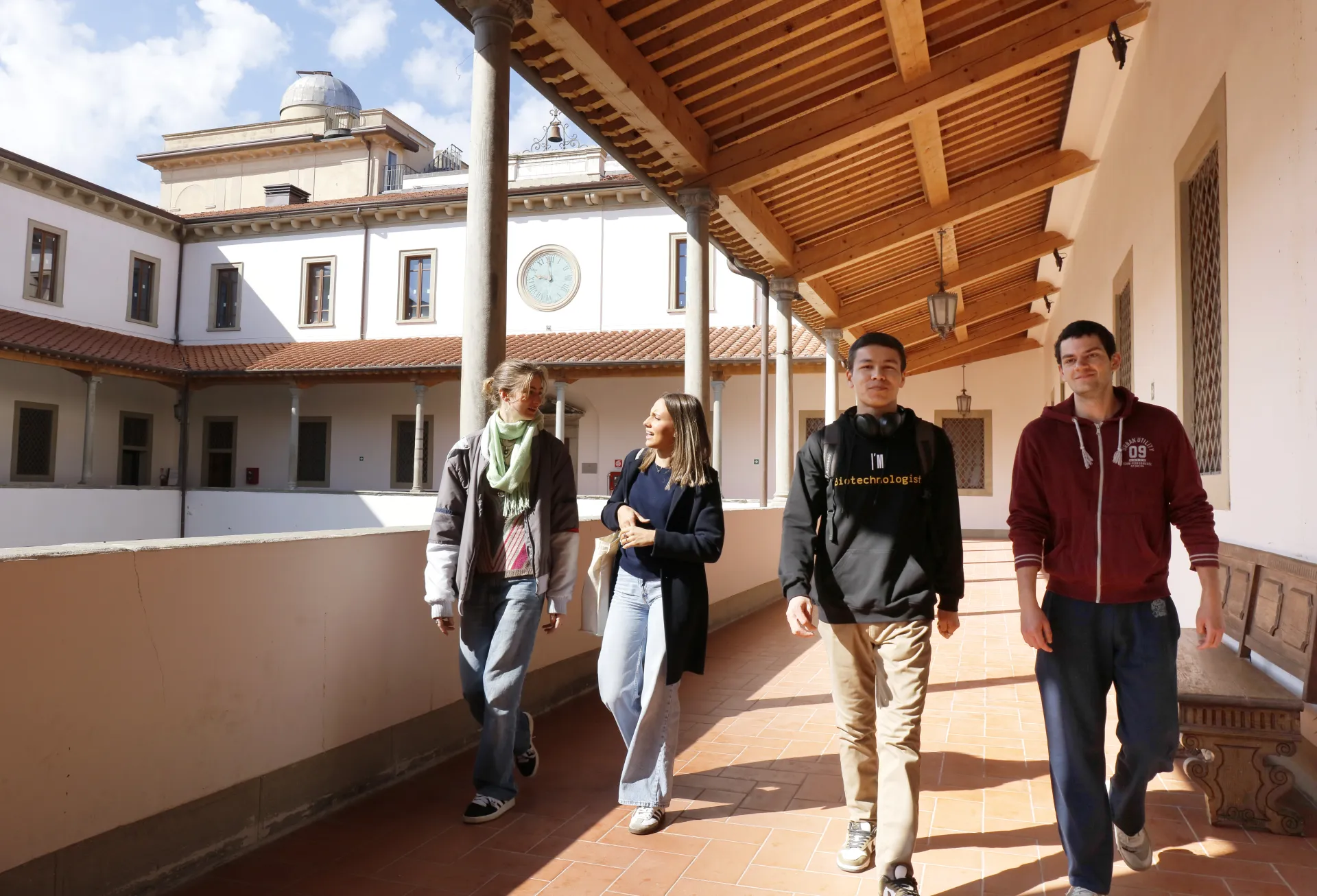


Learn more about our partner institutions

Humboldt-Universität zu Berlin

UCLouvain

University of Pisa

Humboldt-Universität zu Berlin: A global role model

UCLouvain: Bringing six centuries of experience to Circle U.

The University of Pisa: everyday life, inspiring learning

Studying in Berlin: The Humboldt experience

Five Great Reasons to Study in Louvain-la-Neuve, by Madeline Wayembercg