Strategic Partnership InnovEd4TS (Innovative Education for Transferable Skills), is five member universities of Circle U. Alliance: Humboldt University, UCLouvain, University of Oslo, University of Aarhus and Université de Paris, along with the University of Lisbon.
What is a 'field mission'?
The six member universities of the InnovEd4TS Strategic Partnership analyse ten Flagship Initiatives involving transferable skills identified by the InnovEd4TS Advisory Board (see the article The strategic partnership on transferable skills InnovEd4TS finalises its first stage). In order to explore these initiatives, field missions involving a panel of peer experts from the different universities are being carried out.
The field mission is a peer learning exercise where professors leading the Flagship Initiative, peer experts reviewing the initiative, and students participating in it all have the opportunity to meet and learn during a two-day comprehensive virtual visit. The purpose is twofold: for the host to share and get interesting ideas and constructive comments on how to develop the initiative further; for the peer experts in the panel to discover an innovative pedagogical initiative and get inspired to implement similar initiatives or to adapt it to their own context and fields of interest.
Due to the global pandemic, the flagship visit at UCLouvain had to be held remotely. It marked the second virtual initiative from the Strategic Partnership InnovEdE4TS, joining together the five member universities of the Circle U. Alliance (Humboldt, UCLouvain, Oslo, Aarhus and Paris) along with the University of Lisbon.
IngénieuxSud is a course organised by the UCLouvain in partnership with NGOs. Every year, it enables around 150 students from Belgium and universities of the South to work together on 25 concrete and sustainable projects. IngénieuxSud won the Global Education Innovation Award in 2017.
Transferable Skills developed in the IngénieuxSud initiative
|
Critical thinking |
Interdisciplinarity |

Intercultural understanding |
|
Drawings by Benoît Raucent |
||


An educational project serving a balanced and fair collaboration between Northern and Southern Partners
IngénieuxSud is a cooperation between UCLouvain and the university NGO Louvain Coopération. It is a multidisciplinary course which offers students from UCLouvain and from its partner institutions in Africa, Asia and South America, the opportunity to work together on 25 concrete and sustainable projects in collaboration with local partners and NGOs. Students receive five ECTS per academic year and meet for two hours a week. Professors and experts from universities and NGOs in the North and the South supervise them.
Over the course of one academic year, students research a technical issue (on water, agro ecology, energy, etc.) in a Southern country, identified by associations, cooperatives or NGOs which are in direct contact with the local population. They look for appropriate and sustainable solutions to the challenges formulated by local actors. Then, they carry out a one-month internship in the field during the summer to implement, together, the envisaged solutions. IngénieuxSud contributes to building the capacity of students and teachers to make decisions in favour of environmental integrity, economic viability and a fairer society for present and future generations globally.
Transferable skills for a service-learning approach
Intercultural understanding is at the heart of IngénieuxSud, given a high focus on communication and cooperation between the Belgian students and the local community of students and partners. Stéphanie Merle, member of the Louvain Coopération NGO and co-founder of the IngénieuxSud initiative, explains that "beyond the traditional classroom, a 'service-learning approach' is implemented, a concept inherited from the United States, which concentrates on collaboration with local actors".
Critical thinking develops through lectures, debates, practical exercises, workshops and field interactions. Ultimately, students are able to think globally and become aware of the interdependence of technical and non-technical issues, such as economic and socio-cultural challenges, when trying to solve problems. Jean-Pierre Raskin, professor at the Louvain School of Engineering and co-founder of the IngénieuxSud initiative, emphasises the need at the beginning of the project to present students not directly with the problems to be solved but with the global themes to be explored: "The themes that we and our local partners propose to our students should be general. On this basis, we put them in contact with cooperatives and NGOs locally, and they all define the objectives together. If from the very beginning we present students with very technical problems, they jump on the technical solutions, and it is then difficult to make them see the problems from another angle".
IngénieuxSud also encourages the development of interdisciplinary skills. The student teams are interdisciplinary and present their technical solution before a transdisciplinary panel of professors from UCLouvain and the partner universities. Yvan Larondelle, professor at the Faculty of Biosciences Engineering at UCLouvain, highlights this aspect of the project: "When we opened IngénieuxSud to our students from the Faculty, there was great interest," he says. "One of the main advantages of the IngénieuxSud project is that we can put engineering students in contact with biologists and even students in the humanities. This makes it possible to build an interdisciplinary team".
Experts from the six member universities of InnovEd4TS were very enthusiastic about the initiative, which they say also allows students to develop other transferable skills, such as teamwork, but also problem solving, from taking a systemic approach to problems to building prototypes. Grégoire Le Brun, teaching assistant of the IngénieuxSud initiative, described the methodological support students receive to help them structure the complexity of the project into a written final report (workshops on concept implementation, on project management, ...).
The experts also suggested that global citizenship, i.e. the ability to think as world citizens, to consider global problems on the basis of a deep understanding of various values and to promote the well-being not only of oneself but also to contribute to the well-being of others, is also a skill developed by the students of IngénieuxSud.
Challenges contributing to learning outcomes
In most projects, despite careful preparation and hard work in advance, students reveal that challenges arise once they are on-site. Benoît Herman, professor at the Institute of Mechanics, Materials and Civil Engineering at UCLouvain, describes the challenges students face: "Often, this is the first time that students are confronted with a real-world problem, there is not a single solution, perhaps not like the mathematical problem they are used to. It takes them out of their comfort zone. In Belgium, their creativity is the limit - in the South, technical possibilities offer new limits, and they have to adapt".
Margo, a student who participated in IngénieuxSud two years ago with a project in Benin, had an incredible experience and is still very proud of the result. She explains: "The local students were very committed from the beginning. They were there for six weeks - the team consisted of all six of us, not just the four Belgian students. It didn't go perfectly; you have to solve problems that you don't expect. We learned a lot from the experience. Another important learning experience was oral communication", she says.
For an engineering student like Alex, IngénieuxSud taught him to ask "why" in addition to the usual "how". He quickly discovered that he was developing a certain resourcefulness and learned what to do when mistakes were made. Learning to plan from scratch was one of the main learning outcomes that he used afterwards.
Haddy Mbuyi, associate professor at the University of Kinshasa, pointed out that the common language (French) was of great help to facilitate communication and exchanges between students.
The way forward
The two-day meetings were engaging and valued by all the participants. Feedback was shared and led to rich exchanges with the panel of experts. Additional transferable skills proposed by the expert panel allowed the group to debate and reflect. Based on the work provided by faculty and students, experts also suggested that the initiative would perhaps be worth more than five ECTS.
IngénieuxSud is clearly a program that requires commitment on the part of students, but it also meets their learning needs and provides a challenging and rewarding experience for them.
Hosts of the IngénieuxSud initiative at UCLouvain

Jean-Pierre Raskin
- Professor
- UCLouvain

Jean-Pierre Raskin
- Professor
- UCLouvain
Jean-Pierre Raskin is professor at Louvain School of Engineering and member of the UCLouvain Institute of Information and Communication Technologies, Electronics and Applied Mathematics (ICTEAM). He co-founded the IngénieuxSud initiative.

Stéphanie Merle
- Global citizenship and solidarity education
- University NGO Louvain Coopération

Stéphanie Merle
- Global citizenship and solidarity education
- University NGO Louvain Coopération
Stéphanie Merle is responsible for Global citizenship and solidarity education at the university NGO Louvain Coopération. She has been involved in the IngénieuxSud course for the past 8 years.

Benoît Herman
- Principal Research Logistic Collaborator
- Institute of Mechanics, Materials and Civil Engineering (iMMC)

Benoît Herman
- Principal Research Logistic Collaborator
- Institute of Mechanics, Materials and Civil Engineering (iMMC)
Benoît Herman is Principal Research Logistic Collaborator at the Institute of Mechanics, Materials and Civil Engineering (iMMC) and head of the CREDEM platform, a technological platform that ensures the design, the manufacturing, the control, and the in-use testing of electromechanical devices. The platform also supports many practical activities for students in engineering.

Yvan Larondelle
- Professor
- UCLouvain

Yvan Larondelle
- Professor
- UCLouvain
Yvan Larondelle is a professor at the Faculty of Bioscience Engineering at UCLouvain. He is one of the co-founders of the interdisciplinary initiative 'Louvain4Nutrition'. He works in close collaboration with several universities in Europe and in developing countries (Bolivia, Brazil, Cameroon, Peru, Vietnam).

Haddy Mbuyi
- Professor
- University of Kinshasa

Haddy Mbuyi
- Professor
- University of Kinshasa
Haddy Mbuyi is a professor at the University of Kinshasa and a former PhD student at UCLouvain. He is the supervisor of the University of Kinshasa's students involved in the IngénieuxSud initiative.

Grégoire Le Brun
- PhD Student
- UCLouvain

Grégoire Le Brun
- PhD Student
- UCLouvain
Grégoire Le Brun is a PhD student at the Institute of Information and Communication Technologies, Electronics and Applied Mathematics (ICTM) of UCLouvain and a teaching assistant in the IngénieuxSud initiative.
Peer Expert Panel

Pedro Abreu
- Associate Professor
- University of Lisbon

Pedro Abreu
- Associate Professor
- University of Lisbon
Pedro Abreu is Associate Professor with Aggregation at Instituto Superior Técnico of the University of Lisbon and Researcher at Laboratory of Instrumentation and Experimental Particle Physics. He is the President of the South & Isles Delegation of the Portuguese Physics Society.

Jens Bennedsen
- Senior Associate Professor
- Aarhus University

Jens Bennedsen
- Senior Associate Professor
- Aarhus University
Jens Bennedsen is a Doctor of Philosophy and a Senior Associate Professor in engineering Didactics at Aarhus University. His research area includes educational methods, technology and curriculum development methodology. He is a co-leader of the European Department of the CDIO global initiative (Conceiving—Designing— Implementing —Operating), an innovative educational framework for engineering students.
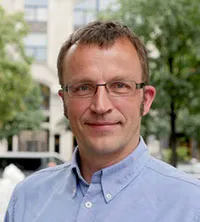
Wolfgang Deicke
- coordinator of the bologna.lab
- Humboldt-Universität

Wolfgang Deicke
- coordinator of the bologna.lab
- Humboldt-Universität
Wolfgang Deicke is the coordinator of the Humboldt-Universität's bologna.lab, the university's collaborative platform for developing and implementing innovative teaching and learning formats. His subject background is in sociology and political science; his current research interests are the development of (student) research competencies and organisational development in Higher Education.

Françoise Lestage
- Professor
- Université Paris Cité

Françoise Lestage
- Professor
- Université Paris Cité
Françoise Lestage is an Anthropologist, professor at Université de Paris and researcher at the Research Unit Migration and Society (URMIS). Her research focuses on migration policies in Mexico since the late 1990s; on interethnic relations in migrant environments; on the deceased in the social and family life of migrants; and on family ties and the life cycle.

Jeanette H. Magnus
- Director of the Centre for Global Health
- University of Oslo

Jeanette H. Magnus
- Director of the Centre for Global Health
- University of Oslo
Jeanette H. Magnus is Director of the Centre for Global Health at the University of Oslo and Adjunct Professor at the Department of Global Community Health and Behavioural Sciences at the Tulane School of Public Health and Tropical Medicine in New Orleans. With the experience of leading work in community clinics, public health, hospitals, and higher education in the United States, Norway and Ethiopia, she has been increasingly engaged in institutional capacity development.
Students of the UCLouvain IngénieuxSud initiative
- Alex Pip, student at the Institute of Mechanics, Materials and Civil Engineering (IMMC)
- Margo Hauwaert, former student at the Louvain School of Engineering
Fact Box and Definitions
The InnovEd4TS Project (Innovative Education for Transferable Skills) focuses on the analysis and development of initiatives that promote the acquisition of transferable skills among students.
The Booklet
The booklet is a tool which serves as the basis for group discussion on the transferable skills developed by flagship initiatives.