Embedding Mobility and Internationalisation in the Curriculum

Circle U. is committed to making international experiences a natural part of education. The alliance's Joint Policy Framework for Mobility sets the ambition of embedding mobility across all study programmes, making international learning opportunities accessible to many more students than traditional exchange schemes alone.
This toolkit is not intended to provide a narrow definition of embedded mobility. Instead, it offers inspiration and practical examples of how mobility, international and intercultural learning can be integrated into courses and programmes in different ways.
What is Embedded Mobility?
At its core, embedded mobility means that international experiences are designed as part of the curriculum rather than offered as separate, optional activities. These experiences may be physical, virtual or blended, and should contribute meaningfully to student learning and programme objectives.
Examples include:
- A study semester or year abroad built into a degree programme
- Short-term mobility, field trips, summer schools or Blended Intensive Programmes (BIPs)
- Internships, placements, research projects or capstone projects with international partners
- Virtual collaboration with students and staff from other universities
- Joint teaching, guest lectures or co-designed modules delivered across institutions
- Courses that combine online international teamwork with short physical mobility periods
The aim is to encourage flexible approaches that fit different disciplines, programme structures and student needs. By sharing a range of practices, this toolkit seeks to help staff identify opportunities to internationalise curricula and expand access to meaningful international learning experiences for all students.
Types of Embedded Mobility
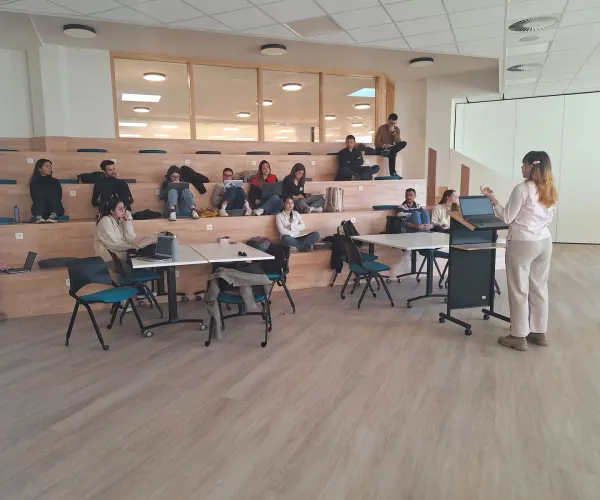
Guest lecturing (virtual or in person)

Guest lecturing (virtual or in person)

Virtual Exchanges / COIL

Virtual Exchanges / COIL
Collaborative Online International Learning (COIL) is a teaching and learning format that allows you to internationalise your courses without the need for physical mobility. By using digital tools, COIL can connect students and lecturers from across all Circle U. universities within existing courses.
COIL courses are flexible in design, encourage interdisciplinary projects and can, depending on the setup, be implemented with little administrative effort to foster innovative, cross-border learning experiences for your students. Together with Circle U. partners, you develop teaching units that connect two existing courses at the participating universities. Students from different countries and cultural backgrounds work together in mixed groups to complete a task cooperatively.
Depending on the content of the course and the experience of the instructors and students, collaboration can range from a single online session to a semester-long project with a joint final assignment.
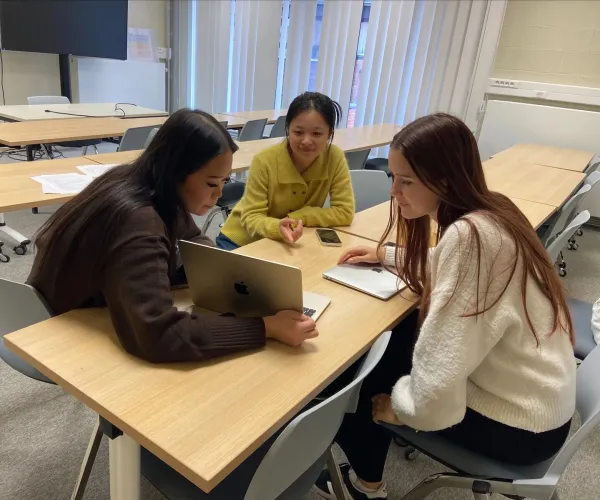
Short-term joint courses with physical or blended mobility (BIP)

Short-term joint courses with physical or blended mobility (BIP)
An Erasmus+ Blended Intensive Programme (BIP) is a short, collaborative learning experience developed by at least three higher education institutions from three Erasmus+ Programme countries. It combines physical mobility abroad, lasting 5 to 30 days, with a compulsory virtual component supporting online collaboration and teamwork. For students, the programme must award at least 3 ECTS credits.
BIPs are designed around innovative, intensive and transnational learning, teaching or training, rather than simply adding mobility to a conventional course. They can bring together students and staff from all levels and/or different disciplines and institutions to address shared challenges through active, collaborative methods.
For academics, a BIP offers a practical way to internationalise an existing course, summer school or collaborative activity, test new partnerships and create learning outcomes enriched by multiple institutional perspectives.
Successful BIPs require early agreement on academic leadership, learning outcomes, assessment, recognition, partner roles, recruitment and the organisation of the virtual and physical components.

Exchange Tracks

Exchange Tracks
Exchange tracks are pre-approved mobility pathways where courses and learning outcomes have already been quality assured. They are designed to integrate international experience seamlessly into degree programmes, ensuring that exchange periods are predictable, academically relevant, and do not delay graduation.
Exchange tracks can be reciprocal or non-reciprocal. Reciprocal tracks require academic departments at both institutions to align their curricula and course offerings. In non-reciprocal tracks, a home institution agrees with a host university to send a specified number of students for a defined period, such as one semester, with access to designated courses.
This model is particularly valuable for language studies, where students can study a language in a country where it is spoken. At the same time, partner institutions may benefit from access to academic fields that are especially strong at the home institution, creating mutually beneficial opportunities for student mobility.

Joint Programmes

Joint Programmes
Joint programmes are study programmes developed and delivered by two or more Circle U. universities and/or associated partners. Students follow an integrated curriculum and may study at more than one institution during their degree. In some cases, they receive a joint degree awarded collectively by the partner universities.
Joint programmes have been strongly supported through the European Higher Education Area (EHEA) and the Bologna Process, as they promote cooperation between universities and make it easier for students to study across borders. Joint programmes offer important benefits for students, institutions, and society. Students gain international ex-perience, develop intercultural skills, and access expertise, courses, and resources from multiple Circle U. univer-sities. Circle U. universities strengthen their partnerships, collaborate on curriculum development, and improve the recognition and quality of their programmes. Joint programmes also support student mobility, credit transfer, and shared quality assurance processes.