Invited experts from five Circle U. universities had the opportunity to learn about the undergraduate programme "General Studies" (Estudos Gerais in Portuguese) offered since 2011 to students from three different faculties and from 2016 to students from eight different faculties.
The General Studies bachelor's degree is deeply rooted in the spirit of the liberal arts and liberal education. The main objective of the programme is to allow bachelor students to develop a comprehensive knowledge in various disciplines. Bridging the gap between social and exact sciences, it promotes interdisciplinary mobility as well as international mobility through the studies of global concepts, texts and authors. Students are able to design their own modules based on their preferences. They choose a major and a minor (or several of them) among diverse subjects in arts, sciences and humanities. One common course around the study of Core Texts is followed by all students so that they acquire knowledge on important authors while developing critical thinking skills. A tutoring system has been developed to assist students in designing their programme. Throughout the years, the programme has gained a high popularity among students. This year, more than 300 students applied, while only 68 were accepted.
What is a "field mission"?
The six member universities of the InnovEd4TS Strategic Partnership analyse ten Flagship Initiatives involving transferable skills identified by the InnovEd4TS Advisory Board (see the article The strategic partnership on transferable skills InnovEd4TS finalises its first stage). In order to explore these initiatives, field missions involving a panel of peer experts from the different universities are being carried out.
The field mission is a peer learning exercise where professors leading the Flagship Initiative, peer experts reviewing the initiative, and students participating in it all have the opportunity to meet and learn during a two-day comprehensive virtual visit. The purpose is twofold: for the host to share and get interesting ideas and constructive comments on how to develop the initiative further; for the peer experts in the panel to discover an innovative pedagogical initiative and get inspired to implement similar initiatives or to adapt it to their own context and fields of interest.
Transferable Skills developed in the programme "General Studies"
"General Studies" at the University of Lisbon focused on three transferable skills.
 |
Interdisciplinarity is the key focus of the programme as the concept has spread across the university. Students combine disciplines in their curriculum through the Major / Minor approach in an innovative way. |
 |
Students develop intercultural understanding by building robust general knowledge based on texts and concepts from international authors, thus they open up to global perspectives. |
 |
Critical thinking skills emerge through the confrontation of ideas. Students participate in entire sessions dedicated to discussion and self-reflection. |
A good balance between autonomy and teamwork
Despite the support of tutors and an easy dialogue with the administrative staff and professors, students need to tailor their own schedule and be proactive to give coherence to their choices. Furthermore, students are able to develop teamwork skills. The course Core Texts enables students to engage in collective reflection.
Overall, the students develop a wide range of skills, from analysis to organising and planning. Oral and written communication competencies in two languages are acquired as the environment encourages interdisciplinary interactions and communication among students and with the professors.
An in-depth interdisciplinary approach
"Core Texts" is the only required course. The course is divided into three semesters during which the students read, learn and discuss major texts from various disciplines. These texts are from Antiquity and the Middle Ages; Renaissance and Enlightenment; Romanticism to the Present Day.
The pattern is to invite a specialist to give two lectures each semester on a specific text. After the presentation and in-depth analysis of the text by the expert, the class is divided into smaller discussion groups of 15 or 20 students that, together, critically discuss and confront their ideas on the text. The goal for the students is to converse with fundamental texts. Main fields of knowledge tend to be covered, from physics to poetry, theatre or philosophy.
The students have the opportunity to meet with the same group during three semesters. This is unique as students are able to discuss, analyse, have an opinion, produce ideas, listen to each other and engage in fruitful discussions. Professor Henrique Leitão described the course as "an intellectual experience, in which students see these texts as a second skin because they have studied them so much."
A collective journey: the support of monitors and tutors
The degree is based on students' motivation and their desire to learn from a diversity of academic fields. Tutors help students to design their own curricula according to their wishes and make sure that the choice of courses, majors or minors is more consistent. Tutors themselves may come from many different faculties.
In addition, in the course "Core Texts," discussion sessions are led by facilitators (they are called monitors). They usually are former students from the course. In this respect, the experts noted that the classes do a great job at mobilising experts and monitors in order to spark student learning. Similarly, the monitors supervise student discussion sessions and facilitate the circulation of information between students, monitors and experts on the texts. One of the monitors, João Maria Carvalho, refers to the students as a "community."
On a logistical level, experts were impressed by how the programme is managed. The general architecture of the programme is based primarily on the motivation of students to choose the disciplines they wish to study.
Looking ahead: the challenge of multilingualism
Experts recognised how difficult it must have been to set up this degree. The initiators of the degree exposed the challenges encountered in getting the idea of a liberal arts programme accepted by the administration and the presidency of the university.
Ten years later, its success among students and its expansion to other academic fields are remarkable. When it started, three faculties took part in the programme, then it went up to eight, and negotiations are currently running to expand it further. In the coming months, eleven or twelve faculties out of 18 shall be part of the programme.
The experts acknowledged that this kind of degree does not exist in their respective universities. A great way forward would be to start a European rollout of the project. For this, the challenges regarding multilingualism need to be presented. In Lisbon, the designers of the degree include this aspect by requiring a good level in two languages. For example, the course "Core texts" offers to study texts in English, Spanish or Portuguese. The combination of the multilingual identity along with its interdisciplinary perspective makes the initiative "General Studies" inspiring in the European higher education landscape.
Leaders of the initiative at the University of Lisbon

Fátima Reis
- Professor
- University of Lisbon

Fátima Reis
- Professor
- University of Lisbon
Fátima Reis is a modern history professor at the University of Lisbon. She is the coordinator of the programme "General Studies." She has a PhD in Early Modern History from the University of Lisbon. Besides, she is an associate professor at the Faculdade de Letras (School of Arts and Humanities), and a researcher at the Centro de História (History Centre) and Director of the Chair of Sephardic Studies.

António Feijó
- Professor
- University of Lisbon

António Feijó
- Professor
- University of Lisbon
António Feijó is a professor in the Department of English Studies and the Programme in Theory of Literature at the School of Arts and Humanities of the University of Lisbon. He is one of the designers of the degree "General Studies."He graduated in Anglo-American Studies from the Faculdade de Letras da Universidade de Lisboa and holds a Master of Arts in English and American Literature from the State University of New York, as well as a PhD in English and American Literature from Brown University.

Miguel Tamen
- Dean of the School of Arts and Humanities
- University of Lisbon

Miguel Tamen
- Dean of the School of Arts and Humanities
- University of Lisbon
Miguel Tamen is currently Dean of the School of Arts and Humanities of the University of Lisbon. He is one of the designers of the degree "General Studies." He studied at the University of Lisbon and at the University of Minnesota, where he holds a PhD. He is also a member of the Department of Romance Literatures at the former of these universities. He was, between 2000 and 2014, a visiting professor at the University of Chicago, and a senior fellow at the Stanford Humanities Centre and the National Humanities Centre. His interests include philosophy and literature, and he has written ten books.

Eduardo Manuel Pereira
- Associate Professor
- University of Lisbon

Eduardo Manuel Pereira
- Associate Professor
- University of Lisbon
Eduardo Manuel Pereira is currently an Associate Professor in the scientific area of Structural Mechanics and Structures of the Department of Civil Engineering, Architecture and Geo-Resources. He has been involved in the program "General Studies" for many years. He graduated with a Bachelor of Science, Master of Science and PhD from Instituto Superior Técnico (now part of the University of Lisbon).
Professors who participated in the field mission:
- João Figueiredo is the coordinator of the course "Core Texts". He holds degrees from the University of Lisbon, where he also teaches in the Romance Literatures Department. His interests include aesthetics, art history, Italian Studies, and Renaissance literature.
- Henrique Leitão is an historian of science. He has taken part in the course "Core Texts" for several years. His lectures focus on texts of Aristotle, Copernicus and Galileo. He is currently a researcher at the Interuniversity Centre for the History of Science and Technology (CIUHCT) and Chair of the Department of History and Philosophy of Science (DHFC) at the Faculty of Sciences, University of Lisbon (FCUL).
- Rui Agostinho is a professor of astronomy and astrophysics at the University of Lisbon. He teaches a class to students of the program "General Studies".
Former Students, now monitors, who participated in the field mission:
- José Maria Carvalho Dos Reis is a law student
- Maria da Paz Carvalho
- João Maria Carvalho graduated in Languages, Literature and Culture
Peer Experts Panel

Vibe A. Jelsbak
- Peer Expert
- Aarhus University

Vibe A. Jelsbak
- Peer Expert
- Aarhus University
Vibe A. Jelsbak works at Aarhus University. She graduated with a Master of Science (Cand. Scient.) in Biomedicine in 1999, and has a Master's degree in ICT and Learning (MIL) from 2012. Her primary interests are integrating professional practice and theoretical knowledge into the curriculum. Her interests are thereby related to students' knowledge, skills and competencies relevant for their future workplace - (and lifelong) learning.

Marie-Agnès Sari
- Professor
- Université Paris Cité

Marie-Agnès Sari
- Professor
- Université Paris Cité
Marie-Agnès Sari is a Professor of biochemistry and molecular biology at the Université de Paris. She is Vice-Dean of Education in the Faculty of Science and Adjunct director of the biomedical sciences department. She is affiliated with the Laboratory of Pharmacological and Toxicological Chemistry and Biochemistry.

Marie Baland
- Peer Expert
- UCLouvain

Marie Baland
- Peer Expert
- UCLouvain
Marie Baland has a degree in communication with a specialisation in culture and new media. She has been working for several years for both the cultural department of UCLouvain (UCLouvain Culture) and for the university's museum (Museum L). One of this department's activities is to organise the residences programme that was presented in a former field mission held in Louvain.

Mathilde Skoie
- Pro-Dean at the Faculty of Humanities
- University of Oslo

Mathilde Skoie
- Pro-Dean at the Faculty of Humanities
- University of Oslo
Mathilde Skoie is Pro-Dean at the Faculty of Humanities at the University of Oslo. Mathilde Skoie is professor of Latin in the Department of Philosophy, Classics, History of Art and Ideas (IFIKK). She is very interested in the liberal arts approach.
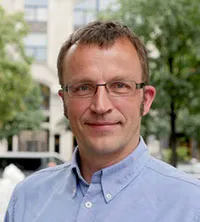
Wolfgang Deicke
- Professor
- Humboldt-Universität zu Berlin
Wolfgang Deicke
- Professor
- Humboldt-Universität zu Berlin
Wolfgang Deicke is a Professor in politics and sociology. He is currently the Director of the Teaching and Learning Lab at Humboldt University. Before becoming the coordinator of the bologna.lab at Humboldt-Universität in 2012, he variedly taught sociology, politics and the history of European thought and society at the (now) University of Northampton, School of Oriental and African Studies in London and Ruskin College, Oxford. His current research interests are the development of (student) research competencies and organisational development in Higher Education. Since March 2020, he has also been a joint coordinator of Humboldt-Universität's Task Force Digital Teaching and Learning.
Fact Box and Definitions
The InnovEd4TS Project (Innovative Education for Transferable Skills) focuses on the analysis and development of initiatives that promote the acquisition of transferable skills among students.
The Booklet
The booklet is a tool which serves as the basis for group discussion on the transferable skills developed by flagship initiatives.