Invited experts from four universities of the Circle U. alliance and the University of Lisbon discussed the problem-based learning (PBL) approach that has been gradually introduced at the Faculty of Medicine of Université de Paris in collaboration with the School of Health Educators of Maastricht University over the past two years.
The programme is growing in scope and is moving on from elective classes to become a structuring force in health education. This field mission was an opportunity to discuss the student competencies that the PBL method fosters. It also addresses the challenges of developing an innovative and collaborative pedagogy in the competitive environment of medical studies, as well as the issues around implementing a landslide change in the way traditional medical tutorials are organised.
What is a "field mission"?
The six member universities of the InnovEd4TS Strategic Partnership analyse nine Flagship Initiatives involving transferable skills identified by the InnovEd4TS Advisory Board (see the article The strategic partnership on transferable skills InnovEd4TS finalises its first stage). To explore these initiatives, field missions involving a panel of peer experts from the different universities are being carried out. To support the missions, the "booklet" is a tool used which serves as the basis for group discussion on the transferable skills developed by flagship initiatives.
The field mission is a peer learning exercise where professors leading the Flagship Initiative, peer experts reviewing the initiative, and students participating in it all have the opportunity to meet and learn during a two-day comprehensive virtual visit. The purpose is twofold: for the host to share and get interesting ideas and constructive comments on how to develop the initiative further; for the peer experts in the panel to discover an innovative pedagogical initiative and get inspired to implement similar initiatives or to adapt it to their own context and fields of interest.
Transferable Skills developed in the Problem-Based learning at Université de Paris
This flagship initiative focuses on three transferable skills.
PBL is about acquiring knowledge while solving problems in a "learning by doing " approach. Participants - faculty members, students, and experts - voted on the transferable skills that PBL helps to acquire and agreed on problem-solving as the most important skill. Critical thinking and teamwork came second. Creativity and oral communication came third in the survey.
 |
Problem-solving is at the heart of problem-based learning (PBL). It implies identifying, analysing, and redefining problems; identifying tools to solve the problem, and applying those tools to a context |
 |
Teamwork is also a strong component of PBL, involving conflict management, constructive decision-making and the ability to share workload. The aim is to move from 'I prove that I am the best' to 'we have to work as a team to be the best', summarises Elisabeth Macintyre. |
 |
Oral communication has to do with adapting communication styles according to one's role in the team; filtering, adapting and sharing research material; teaching group members (using visuals, concepts, rephrasing). |
PBL at Université Paris Citté is taught in French and English (25% of students follow PBL classes in English): it also aims at improving students' English language skills in order to prepare students for their roles as future health professionals working on the international stage.
From competition to collaboration
Viktoria Nagy, Professor of Medical English and Elizabeth Macintyre, Professor of Haematology and Vice President for International Affairs at Université de Paris, leaders and co-coordinators of the PBL initiative at Université Paris Cité, have organised an introductory session aimed at presenting basic theoretical notions and the skillset provided by PBL, as well as the history of the current elective programme and its perspectives at Université de Paris. Viktoria Nagy provided references, articles and research material on PBL.
The key tenets of the PBL methodology
Viktoria Nagy and Elizabeth Macintyre presented the four key principles of PBL:
- Constructive and active learning: Actively creating one's own knowledge and know-how based on pre-existing experience to make the learning process meaningful and to enhance the long-term acquisition of knowledge;
- Contextual learning: Real-life cases with an interdisciplinary take are used to facilitate the application of acquired knowledge and know-how in clinical conditions to enhance students' clinical reasoning skills;
- Collaborative learning: The teamwork setting and small group format help students acquire « soft skills » and prepare students for the work in a hospital environment where teamwork skills are essential;
- Self-directed learning: Students co-define learning goals and the means to achieve them; as a result, they grow in autonomy - another important quality in a professional setting.
Moreover, even though the capacity of PBL to convey knowledge has often been questioned, Tina Bering Keiding, an expert from the University of Aarhus, highlighted the "very positive research results on the acquisition of sound knowledge" by students through PBL.
A new role for the professors
In the PBL classroom, the teacher moves on from the traditional role of assessor and course designer to that of facilitator of student interaction and co-creator of knowledge. This implies seeing the role of tutors differently: it is no longer simply about the transmission of knowledge, but rather about accompanying students in the learning process and providing constructive feedback on soft skill management. The teacher's role becomes that of a mentor. "This implies being able to adapt to each student's personal needs. In other words, we're moving towards a more personalised pedagogical methodology, and that requires extensive skills in educational psychology," says Viktoria Nagy. With this respect, two of the main challenges pointed out by experts were: students' and teachers' behavioural patterns and Cultural bias concerning the learning space.
Training tutors is key
Each group comprises 10 to 12 students, each having a tutor who facilitates their work. Given the novelty of the approach, tutors, mainly professors in medicine, receive a 5-hour theoretical training in PBL methodology with the help of Maastricht trainers. They also have weekly meetings to discuss challenges and experiences. Moreover, with the extension of the scope of the PBL-project, the experts at Université de Paris have designed a 15-hour practical training module, targeting both students and tutors that shall enhance group dynamics and the understanding of the PBL-methodology. The new module will be implemented for the first time in 2021.
Assessing student skills differently
Student assessment is made up of 30% traditional, standardised (normative) assessment in the form of multiple-choice questionnaires and of 70% formative assessment with the tutor at mid-semester and at the end of the semester. "These feedback sessions with the tutor improve students' self-reflective skills, help them grow into conscious professionals and establish a personal connection between mentor and student," says Viktoria Nagy. A grid has been set up for the formative evaluation of students with a list of precise criteria such as time management and attendance, adaptability, creativity, communication and teamworking skills. "The novelty of the new, 2021 PBL assessment model is that it'll add a challenge/project-based element to the assessment scheme in order to stimulate students' critical thinking and creativity," explains Viktoria Nagy.
PBL "integrates knowledge, skills and purpose"
During the visit, students insisted on the novelty of the approach: "We learn in a different way", said Sixtine Merieult, a third-year medical student. They appreciated the active learning process that replaces passive listening to the teacher. "It took much more time to find information, but it was much easier to remember it", explained Inès Farag, a second-year medical student. Students presented teamwork as a main feature of the course: "Teamwork is always hard, because you have to learn to delegate and trust others", mentioned Lory Hage, a second-year medical student.
Magali Terme-Zydel, tutor and course manager of the second-year Digestion and Defence class, "enjoyed the lively interaction with the students" and the "focus on the learning process that's more rewarding than the traditional grade and goal-oriented teaching". She also noted the increased "time commitment" to the class.
The strength of PBL is that it "integrates knowledge, skills and purpose", concludes Mary Sutphen, an expert at the University of Oslo.
From experimental to sustainable pedagogical innovation: revolutionising medical education
First steps
In 2019/20, PBL was introduced in collaboration with the School of Health Educators at Maastricht University as a small-scale, 10-week elective module ("Digestion and Defence") for 40 second-year students. The aim of this first course was to get students and staff familiar with the PBL training model and gain student and tutor feedback that would allow for further adaptation to local conditions. Based on the success of this first experimental class, a new, neurology-centred teaching unit, "Thinking and Doing", was created for third-year medical students in 2020-2021.
To meet the needs of the non-directive, student-centred PBL methodology, students work in groups of 10-12 supervised only by a tutor, and as a means of opening students up to international perspectives, a quarter of them have the opportunity to follow the class in an English-speaking group. Another specificity of the Paris model, both compared to traditional tutorials and to other PBL methodologies, is the introduction of a so-called 'Expert session' during which students can directly interact with an expert in the field to complete their findings and find responses to their unanswered questions.
The new enlargement model
"The next logical step in changing health education in France is to introduce PBL into the regular, mandatory curriculum", says Pr. Elizabeth Macintyre. Given the size of academic classes at Université de Paris (800 students in each class) and the human resources this requires, this can only be a partial and gradual process. During the first phase, in 2021-22, a maximum of 80 second-year volunteers will be able to attend all their mandatory tutorials in the PBL model, and the plan is to extend the scope of the program to approximately 200 students the year after, following a year of massive training for future PBL staff. This gradual extension of the programme will be accompanied by a pedagogical experiment in the form of a randomised controlled trial. "This pilot study is a great opportunity to gain further understanding of the psycho-cognitive and socio-cultural impact of the problem-based method", says Vibe Alopaeus Jelsbak from Aarhus Universitet. "Our aim with the experiment is threefold: on the one hand, it will help us understand the socio-cultural and behavioural patterns that have hindered the introduction of the PBL model in France. This in turn will allow us to adapt to the model to local conditions, and ultimately, to set up an optimised model of staff training, and hence train more conscious, open-minded tutors equipped with team-management skills and to provide our students with a complex transferable skillset that'll help them face 21st-century challenges", adds Viktoria Nagy.
Problem and challenge-based learning in the context of Circle U.
The last session of the visit was dedicated to challenge-based learning, an approach similar to PBL, at the heart of the Circle U. alliance. The Circle U. challenges will consist of teams of students from Circle U. universities who will solve challenges posed by Circle U. associated partners in the 3 main themes of the alliance: democracy, global health and climate.
Kevin Lhoste, researcher at CRI - Centre for Interdisciplinary Research, an autonomous pedagogical and research centre attached to Université Paris Cité, presented the annual CRI Summer School, a challenge learning competition focused on SDGs. The 2021 competition, in partnership with the University of Geneva, Yonsei University (Korea) and high schools, focused on health issues. It welcomed 50 students, selected on their motivation, from high school to PhD. They received training on design thinking methodology and soft skills and spent four weeks prototyping tools or designing artistic models with the help of mentors.
Emmanuel Donnard gave a presentation on the Challenge Institute (University of Paris / CRI), an interdisciplinary institute created in 2020 to help the university transform itself by engaging students and teachers in innovative learning experiences.
Circle U. springboard for pedagogical innovation
The experts and the host team engaged in a lively conversation about problem and challenge-based pedagogy in particular, including the difficulty of finding the right scope for projects: neither too narrow nor too broad to engage students, and about student assessment, which cannot be limited to the quality of the scientific knowledge acquisition but must include the ability of students to cooperate.
The institutional challenges of innovative pedagogy in general were also discussed, in particular, the need to demonstrate the effectiveness of innovative pedagogy on students' skills and knowledge. "You can and should measure the effectiveness of teaching", Mary Sutphen argued. Tina Bering Keiding insisted on "using a pragmatic approach" to measuring impact "in limited areas". The scale of innovation was also reported as a challenge, the most difficult being to move from small-scale, sectoral initiatives to widespread pedagogical innovation in universities.
All the experts agree that Circle U. should be a mainstay for such projects around teaching effectiveness and innovative pedagogy. The Circle U. think and do tank on the future of higher education will have this questioning at its heart. All insisted on the need to build on the unintended consequences of COVID, namely the need to use digital tools in teaching.
Leaders of the Problem-Based Learning initiative at Université de Paris

Elizabeth Macintyre
- Vice-President for International Affairs
- Université Paris Cité

Elizabeth Macintyre
- Vice-President for International Affairs
- Université Paris Cité
Franco-Scottish, Pr. Elizabeth Macintyre is currently Vice-President for International Affairs at Université Paris Cité. After internal medical and clinical/laboratory haematology training at University College London she did her PhD at St. Louis Hospital, Paris and a Post-Doctoral stay at Harvard. She was appointed full professor in Diagnostic Haematology at Université de Paris (Descartes) in 1997 and was Head of the Haematology Laboratory at Necker-Enfants Malades Hospital from 1999-2018. Her teaching activities include undergraduate pre-clinical haematology and overall coordination of second year pre-clinical medical studies. She introduced Problem-based learning in the Université de Paris Medical school as a pilot study in 2019. After many years of contributing to various European Haematology Association activities, she will serve as President in June 2021-23.

Viktoria Nagy
- Problem-Based Learning initiative
- Université Paris Cité

Viktoria Nagy
- Problem-Based Learning initiative
- Université Paris Cité
After undergraduate studies in law and medicine, Viktoria Nagy majored in modern French literature and linguistics in 2010 both at Eötvös Lóránd University, Budapest, Hungary and Sorbonne Nouvelle, Paris. She has been working as a tenured medical English teacher, course manager and coordinator of undergraduate and second step medical English education at Université de Paris since 2016. She has created several interdisciplinary curricula with a learning while doing, action-based approach. Currently, she co-coordinates the implementation of an enlarged PBL-model at the Medical Faculty of Université de Paris, and her PhD-project at CRI accompanies the implementation of the pilot PBL-study at Université de Paris.
Other participants of Université de Paris
Course managers:
- Prof. Betrand RENAUD
- Ass. Prof. Magali Terme-Zydel
- Tutor Diane KORB
Students:
- Eleonore WILLEMS
- Sara LOUNES
- Léonie TEXARI
- Lory HAGE
- Inès FARAG
- Sixtine MERIEULT
Peer Experts Panel

Tina Bering Keiding
- Associate Professor
- Aarhus University

Tina Bering Keiding
- Associate Professor
- Aarhus University
Tina Bering Keiding is Deputy Head and Associate Professor at the Centre for Teaching Development and Digital Media at Aarhus University. A specialist in higher education pedagogy, she has written numerous books and articles on both theoretical and practical didactics, on general and more specific topics such as the use of skills portfolios.

Rui Lourenço Teixeira
- Guest Lecturer
- University of Lisbon

Rui Lourenço Teixeira
- Guest Lecturer
- University of Lisbon
Rui Lourenço Teixeira holds a master's degree in Medicine. He has been a teacher since 2011, having taught several disciplines of basic and pre-clinical sciences. He is also a guest lecturer at the Graduate Program in Higher Education Pedagogy of the Institute of Education of the University of Lisbon. He is currently a researcher at the Institute of Molecular Medicine. He is the first ambassador of the "Observar e Aprender" Program at the Faculty of Medicine for the inter-peer training of professors. He is involved with the Medical Education Department at his Medical School.

Vibe A. Jelsbak
- Peer Expert
- Aarhus University

Vibe A. Jelsbak
- Peer Expert
- Aarhus University
Vibe A. Jelsbak works at Aarhus University. She graduated with a Masters of Science (Cand. Scient.) in Biomedicine 1999, and has a Masters degree in ICT and Learning (MIL) from 2012. Her primary interests are integrating professional practice and theoretical knowledge in curriculum. Her interests are thereby related to students' knowledge, skills and competencies relevant for their future workplace - (and lifelong) learning.
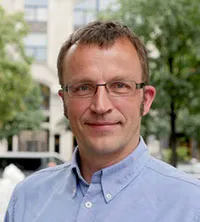
Wolfgang Deicke
- Lead, bologna.lab
- Humboldt University
Wolfgang Deicke
- Lead, bologna.lab
- Humboldt University
Wolfgang Deicke is a social scientist by background. He is currently the lead of the bologna.lab, Humboldt-Universität's laboratory for innovative teaching and learning. Before coming to Humboldt-Universität in 2012, he variedly taught sociology, politics and the history of European thought and society at the (now) University of Northampton, School of Oriental and African Studies in London and Ruskin College, Oxford. In Berlin, he led two research projects on Reserch-based Learning.

Piotr Sobieski
- Professor Emeritus
- UCLouvain

Piotr Sobieski
- Professor Emeritus
- UCLouvain
Piotr Sobieski is Professor Emeritus of UCLouvain since 2014. He has been involved in various pedagogical projects at the Louvain School of Engineering. He significantly contributed to the development of active pedagogy and the set up of a new educational program based on Problem and Project Based Learning started in 1999. In the period 2000-2019, he coordinated the training of tutors for Tutored Active Learning in Small Groups. In the period 2008-2015 he chaired the "Groupe Programme d'Etudes" of UCLouvain to manage and process every study program modifications at UCLouvain for all faculties.

Mary (Molly) Sutphen
- Professor
- University of Oslo

Mary (Molly) Sutphen
- Professor
- University of Oslo
Mary (Molly) Sutphen is Professor at the University of Oslo. She completed her PhD in the history of medicine and the life sciences in 1995 and subsequently joined the University of California at San Francisco, where she taught in a Problem-Based curriculum for medical students. While at the Carnegie Foundation for the Advancement of Teaching (CFAT), she has also conducted extensive research on professional education and published articles, a book, and book chapters on the preparation for practice of nurses, lawyers, and ministers
Fact Box and Definitions
The InnovEd4TS Project (Innovative Education for Transferable Skills) focuses on the analysis and development of initiatives that promote the acquisition of transferable skills among students.
The Booklet
The booklet is a tool which serves as the basis for group discussion on the transferable skills developed by flagship initiatives.