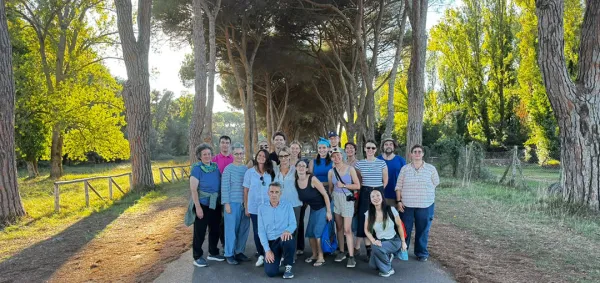
What does sustainability look like when you step outside the classroom and meet the people who deal with its challenges every day? For students taking part in the Sustainable Agritourism Intensive Week (SAIW), the answer emerged through five days of field visits, conversations and teamwork in the Tuscan countryside.
Organised by the University of Pisa from 28 September to 2 October 2026, the summer school brought together students from different academic backgrounds to explore the sustainable management of rural natural and cultural heritage, using agritourism as a living laboratory.
But the experience went far beyond learning about sustainability. It was an opportunity to engage with different perspectives, connect academic knowledge with real-life experiences and discover how much we can learn from the people and places around us.
Learning from local knowledge and experience
For Janina Dragidella, who follows an Educational Studies programme at the University of Vienna, the summer school was an opportunity to explore a subject beyond her usual field of study. What surprised her most was the chance to engage directly with local communities and learn from their experiences. "In academia, we often spend so much time writing and reading papers that we can become disconnected from the places, people and natural environments we are studying. This experience reminded me how important it is to step outside that academic bubble and engage with the world directly. Some things can only truly be understood by experiencing them yourself", she said.
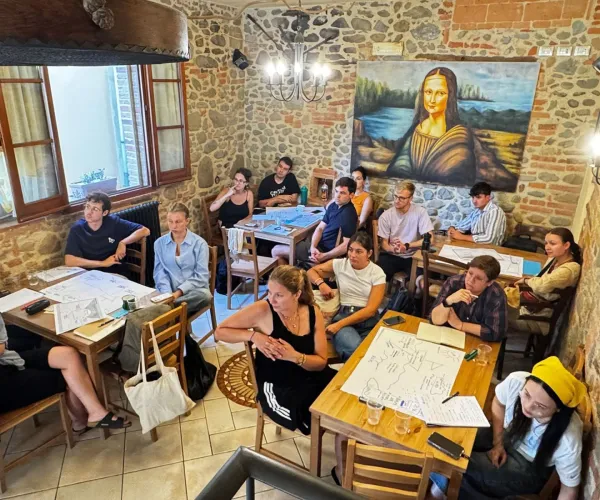
Working in interdisciplinary teams, students were also challenged to develop proposals addressing real issues related to the sustainable management of rural heritage. For Janina, this meant learning to balance new ideas with respect for local knowledge and circumstances.
The experience also encouraged her to reflect on the relationship between academic knowledge and the world beyond the university, reinforcing her belief that sustainability is as much about people and cultural heritage as it is about technical solutions.
"This has made me reflect more on how I can live sustainably in my everyday life, but also on how I want to travel and learn from local communities. It has further strengthened my appreciation for cultural heritage and the importance of keeping traditions and local knowledge alive. I was reminded of how valuable conversations and storytelling are in passing knowledge between generations and cultures. Ultimately, the experience reinforced my belief that sustainability is not just about finding technical solutions, but also about understanding people, respecting cultural heritage and learning from the knowledge that already exists."
New perspectives to take home
For Amelie Stober, who studies in Conservation Biology and Biodiversity Management at the University of Vienna, the summer school offered an opportunity to explore sustainability through disciplines and perspectives beyond her own. "Living and working with an international and interdisciplinary team was a really enriching experience for me. The learning experience when meeting stakeholders and during our discussions was much more enriching because participants with varied backgrounds brought in different topics to consider. Like this, you could always look at things beyond your own point of view according to your field of study."
"What we all took home from this Summer School is much more than new knowledge and innovative ideas. Living and working together in an extraordinary setting, being warmly welcomed by both the organisers and local stakeholders, and experiencing the places from a completely different perspective than any other visitor or tourist, was something that still feels very meaningful to me, even many days after the course ended."

Amelie Stober, University of Vienna
The encounters with local stakeholders also revealed how complex sustainability challenges can be and how important it is to understand the connections between different activities, people and institutions. "Because of this experience, I feel we have to broaden approaches in academia. Whenever I am dealing with challenges connected to my field of study, I'm trying to remember to consider multiple points of view in this matter, and not only the way people with the same background would usually look at it."