Embedding Mobility and Internationalisation in the Curriculum

Circle U. is committed to making international experiences a natural part of education. The alliance's Joint Policy Framework for Mobility sets the ambition of embedding mobility across all study programmes, making international learning opportunities accessible to many more students than traditional exchange schemes alone.
This toolkit is not intended to provide a narrow definition of embedded mobility. Instead, it offers inspiration and practical examples of how mobility, international and intercultural learning can be integrated into courses and programmes in different ways.
What is Embedded Mobility?
At its core, embedded mobility means that international experiences are designed as part of the curriculum rather than offered as separate, optional activities. These experiences may be physical, virtual or blended, and should contribute meaningfully to student learning and programme objectives.
Examples include:
- A study semester or year abroad built into a degree programme
- Short-term mobility, field trips, summer schools or Blended Intensive Programmes (BIPs)
- Internships, placements, research projects or capstone projects with international partners
- Virtual collaboration with students and staff from other universities
- Joint teaching, guest lectures or co-designed modules delivered across institutions
- Courses that combine online international teamwork with short physical mobility periods
The aim is to encourage flexible approaches that fit different disciplines, programme structures and student needs. By sharing a range of practices, this toolkit seeks to help staff identify opportunities to internationalise curricula and expand access to meaningful international learning experiences for all students.
Ways of Embedding Mobility into Courses and Programmes
Guest lecturing (virtual or in person)

Guest lecturing (virtual or in person)
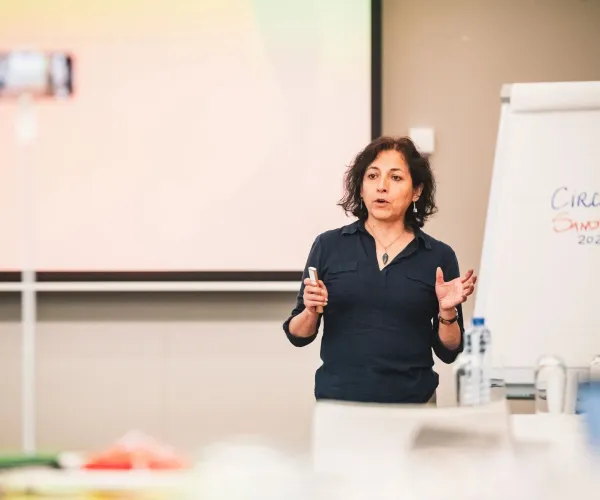
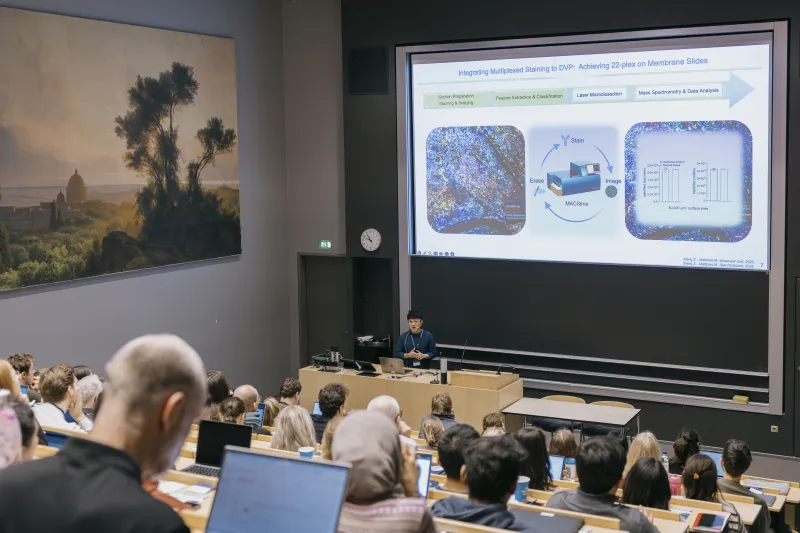
Guest lecturing benefits both students and academic staff by promoting international collaboration, knowledge exchange, and intercultural learning. Students gain exposure to diverse academic perspectives, teaching approaches, and real-world examples, while developing critical thinking, communication, intercultural awareness, and collaboration skills. Academic staff expand their professional networks, exchange pedagogical practices, explore new research opportunities, and gain insights into different higher education systems.
Guest lectures can take place virtually or in person. Virtual formats increase accessibility, flexibility, and sustainability while strengthening digital collaboration skills and enabling broader participation. In-person activities offer richer interaction, stronger networking opportunities, and deeper immersion in different academic and cultural environments. While virtual delivery may limit informal engagement, physical mobility requires greater time and resources.
Together, both formats help participants develop digital, intercultural, multilingual, and collaborative competences, contributing to a more connected, inclusive, and innovative European Higher Education Area.
Lars Johannsen, Democracy Chair from Aarhus University, has guest lectured with several Circle U. partners and says it has value in several ways:
"Some societal challenges, such as populism and corruption, cannot be fully understood from a single disciplinary perspective. Guest lecturing in Circle U. creates a space where different approaches and academic traditions come together. What starts as a guest lecture often becomes much more: a conversation with new colleagues, an exchange of perspectives, and sometimes the beginning of a lasting research collaboration."
Current Opportunities
- Call for applicants for Joint International Teaching - University of Vienna
- Find out more about mobility opportunities for teaching staff and administrative staff

Virtual Exchanges / COIL

Virtual Exchanges / COIL
Collaborative Online International Learning (COIL) is a teaching and learning format that allows you to internationalise your courses without the need for physical mobility. By using digital tools, COIL can connect students and lecturers from across all Circle U. universities within existing courses.
COIL courses are flexible in design, encourage interdisciplinary projects and can, depending on the setup, be implemented with less administrative effort than traditional physical mobility to foster innovative, cross-border learning experiences for your students. Together with Circle U. partners, you develop teaching units that connect two existing courses at the participating universities. Students from different countries and cultural backgrounds work together in mixed groups to complete a task cooperatively.
Depending on the content of the course and the experience of the instructors and students, collaboration can range from a single online session to a semester-long project with a joint final assignment.
COIL Resources
Projects involving lecturers from Humboldt-Universität zu Berlin are eligible to apply for funding of up to 5,000 euros to create or expand innovative online teaching collaborations with Circle U. partner universities.
Study Visits

Study Visits
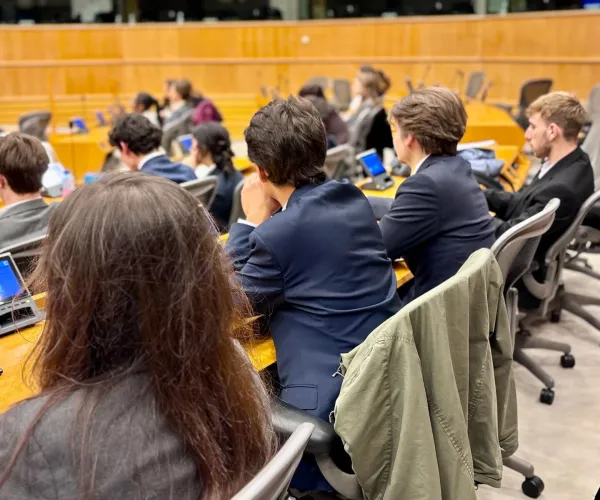
Study visits provide an opportunity to extend learning beyond the classroom by engaging students and staff in academic, cultural and social activities in an international setting. By combining lectures, workshops, site visits and interactions with local institutions, participants can explore course-related themes through direct experience and different disciplinary and cultural perspectives.
Activities may include academic sessions hosted by partner universities and visits to cultural heritage sites, museums, governmental or non-governmental organisations, companies and other relevant institutions. These experiences help students connect theoretical concepts with real-world contexts, enrich their understanding of the subject area, and encourage critical reflection.
In addition to the academic dimension, study visits create valuable opportunities for intercultural learning and community building. For academic and administrative staff, they can facilitate knowledge exchange, promote discussions on educational practices and support the development of new teaching and learning activities. They also provide a platform for establishing and strengthening relationships between partner institutions.
When embedded within existing courses or programmes, study visits can serve as a catalyst for longer-term collaboration, including joint teaching initiatives, student projects, future mobility opportunities and sustained institutional partnerships. As such, they contribute not only to individual learning outcomes but also to the broader internationalisation efforts of participating universities.

Small Scale Collaboration

Small Scale Collaboration
Micro-collaborations are small-scale international learning activities embedded within existing courses or programmes. They offer a flexible and low-threshold way to introduce an international dimension without requiring students to travel, earn additional credits or redesign course structures.
Examples include connecting students across universities to discuss disciplinary topics, exchange perspectives on course assignments or provide peer feedback on project work. Students working on BA or MA theses may benefit from discussing research ideas, methods or sources with peers from partner institutions who share similar academic interests. Language learners can engage in regular conversation exchanges, allowing students studying different languages to practise together while gaining intercultural insights.
Such collaborations can be particularly valuable in specialised subject areas with small student cohorts, where opportunities for peer exchange may otherwise be limited. By creating academic networks across institutions, students gain access to a broader community of learners and diverse perspectives within their field.
For teachers, micro-collaborations represent an accessible entry point to internationalisation, often requiring only modest planning while creating meaningful opportunities for intercultural learning, academic engagement and future collaboration between students, staff and partner institutions.

Short-term joint courses with physical or blended mobility (BIP)

Short-term joint courses with physical or blended mobility (BIP)
An Erasmus+ Blended Intensive Programme (BIP) is a short, collaborative learning experience developed by at least three higher education institutions from three Erasmus+ Programme countries. It combines physical mobility abroad, lasting 5 to 30 days, with a compulsory virtual component supporting online collaboration and teamwork.
BIPs are credited, and they are designed around innovative, intensive and transnational learning, teaching or training, rather than simply adding mobility to a conventional course. They can bring together students and staff from all levels and/or different disciplines and institutions to address shared challenges through active, collaborative methods.
For academics, a BIP offers a practical way to internationalise an existing course, summer school or collaborative activity, test new partnerships and create learning outcomes enriched by multiple institutional perspectives.
To make the collaboration sustainable, the course should ideally be embedded not only in the host institution’s curriculum, but also in those of the sending institutions. Students and staff may receive Erasmus+ mobility funding, while the coordinating institution receives organisational support of €4,000 to €8,000, depending on the number of funded mobile participants.
Successful BIPs require early agreement on academic leadership, learning outcomes, assessment, recognition, partner roles, recruitment and the organisation of the virtual and physical components.
Examples of Circle U. BIPs
- Entrepreneurial Change-making, UCLouvain
- Collaborative Mixed Methods Research in Applied Linguistics, UCLouvain
- Politics of Sustainability in Public Health, University of Oslo
- The Anthropocene: Ecology and Democracy Across the Disciplines, University of Oslo
- Democracy and Development in a Fragmenting World Summer School, University of Belgrade
- Witchcraft on Trial. Analysing Power, Justice, and Legal Narratives through Digital Tools, University of Vienna
Video Resources
- UCLouvain: Les Summer Schools de Circle U.
toutes les opportunités pour les étudiant·es !

Exchange Tracks

Exchange Tracks
Exchange tracks are pre-approved mobility pathways where courses and learning outcomes have already been quality assured. They are designed to integrate international experience seamlessly into degree programmes, ensuring that exchange periods are predictable, academically relevant, and do not delay graduation.
Exchange tracks can be reciprocal or non-reciprocal. Reciprocal tracks require academic departments at both institutions to align their curricula and course offerings. In non-reciprocal tracks, a home institution agrees with a host university to send a specified number of students for a defined period, such as one semester, with access to designated courses.
This model is particularly valuable for language studies, where students can study a language in a country where it is spoken. At the same time, partner institutions may benefit from access to academic fields that are especially strong at the home institution, creating mutually beneficial opportunities for student mobility.
Example of Practice
The University of Oslo offers a Bachelor's programme, Language and Society, which combines language studies and social sciences with clearly recommended study-abroad destinations integrated into the degree structure.
Find out more:
Joint Programmes

Joint Programmes
Joint programmes are study programmes developed and delivered by two or more Circle U. universities and/or associated partners. Students follow an integrated curriculum and may study at more than one institution during their degree. In some cases, they receive a joint degree awarded collectively by the partner universities.
Joint programmes have been strongly supported through the European Higher Education Area (EHEA) and the Bologna Process, as they promote cooperation between universities and make it easier for students to study across borders. Joint programmes offer important benefits for students, institutions, and society. Students gain international experience, develop intercultural skills, and access expertise, courses, and resources from multiple Circle U. universities. Circle U. universities strengthen their partnerships, collaborate on curriculum development, and improve the recognition and quality of their programmes. Joint programmes also support student mobility, credit transfer, and shared quality assurance processes.
Structural Changes

Structural Changes
Two activities at two universities targeting similar structural change
UPCité’s CU. ‘Free Elective’
As French curricula are set in stone for 5 years, Université Paris Cité found more flexibility around free electives to incorporate Circle U. activities in nearly all its study programmes.
Free electives share Circle U.’s goals to broaden students’ skills or academic interests, which explains UPCité’s ability to offer Open Campus courses as part of its students’ free elective options.
Thus, when following any accredited course from the Open Campus and by choosing the CU. free elective, UPCité students are able to recognise 3 ECTS towards their degree. Due to internal organisation and to facilitate the treatment organisation across the alliance, the course undergoes a retroactive validation, meaning that the ECTS credits will only appear or will be validated the following semester.
This structural change has and will simplify the recognition of ECTS credits for UPCité’s students and will allow them to take Open Campus courses not only for their personal and professional development, but also as a recognised element in their diplomas.
University of Vienna’s ‘Alternative Extensions’
Vienna also uses its structure to incorporate Circle U. mobility as most bachelor’s programmes include 15 ECTS of ‘alternative extensions’ (AE), which operate similarly to UPCité’s CU. ‘Free Elective’.
These may be courses offered by the University of Vienna or taken at recognised post-secondary institutions in Austria and abroad. There is no prescribed curriculum for the AE, and it is not necessary to have all 15 ECTS recognised at once; they can—and often do—consist of smaller credit units.
Credits earned through semester mobility, short-term mobility, or any credit-bearing CU Open Campus activity can be recognised toward them. An application for credit recognition is possible at any time.
Resources
Mobility for Teaching Staff

Mobility for Administrative Staff

Academic Matchmaking
Academic Directory

COIL Funding
Contact
To find out more about embedded mobilty and how to get involved, contact your local Circle U. coordinators:
- Aarhus University: aarhus@circle-u.eu
- University of Belgrade: stamlj@rect.bg.ac.rs
- Humboldt-Universität zu Berlin: berlin@circle-u.eu
- King's College London: circle-u@kcl.ac.uk
- UCLouvain: infocircleu@uclouvain.be
- University of Oslo: oslo@circle-u.eu
- Université Paris Cité: circleu.iro@u-pariscite.fr
- University of Pisa: pisa@circle-u.eu
- University of Vienna: vienna@circle-u.eu
Events
Webinar: Launch of the Circle U. Embedded Mobility Toolkit