During this event, students step into the shoes of UN delegates, representing assigned Member States in committees, debating, negotiating, and seeking solutions to some of today’s most pressing global issues.

Why join through Circle U.?

By joining the Circle U. Delegation, students benefit from:

  • A unique international team experience, preparing and travelling together with peers from 9 European universities.
  • Exclusive training workshops (online, Autumn 2025–Winter 2026) led by experienced professors, MUN experts, and guest speakers.
  • Mentoring and support from faculty members throughout the process.
  • An opportunity to develop essential skills: public speaking, negotiation, teamwork, diplomacy, and intercultural collaboration.

Preparation & programme

Before the conference:

  • 6 online workshops (2 hours) on Microsoft Teams (20/10, 30/10, 13/11, 27/11/2025, 5/02, 19/02/2026).

In Rome:

  • Committee sessions, cultural and social events, city tour, expert-led workshops, and high-level guest lectures.

Who can apply?

  • Bachelor (excluding first-year students) and Master students with leadership skills, analytical ability, and team spirit
  • PhD students to serve as chairs and facilitators
  • Researchers to contribute expertise as guest speakers
  • Professors with MUN experience to lead and train student delegations

Want to know more about the experience?

Listen to the podcast from last year’s edition, featuring student testimonies and behind-the-scenes insights.

Practical info

These courses might interest you

AI concept image
BachelorMasterPhD

Beyond Basic Usage: Becoming GenAI Literate in the Age of AI
AI is changing how we learn, work and shape the future. Are you ready to make it work for you? Discover how Generative AI (GenAI) can help you explore ideas, enhance your learning and approach challenges in new ways with this self-paced course. It will equip you with the knowledge and confidence to use AI effectively, critically and responsibly, helping you unlock its potential while keeping your own thinking at the centre.
Conference at the University of Pisa
BachelorMasterPhD

Open Conversation: Can Education Save Democracy?

Can education help strengthen democracy at a time when democratic values and institutions are facing growing challenges? This Open Conversation brings together academics, representatives from schools and civil society to explore the role that universities and education can play in promoting democratic values, civic engagement and a deeper awareness of the values at the heart of the European project.
Plastic waste
BachelorMaster

Open Conversation Series: Plastic: The Global Challenges of a Wonder Material

In this interdisciplinary lecture series, we explore the global challenges of plastic - a wonder material that has become central to modern life. We will explore plastic consumption, waste patterns and solutions such as new technologies for plastic degradation and recycling, industrial approaches to circular product design, and the development of more structured and circular plastic systems.
University of Vienna Philosophy Stairs
BachelorMasterPhD 2 ECTS

Lecture: Critical AI Language and Literacy Colloquium (CAILLC)
The colloquium presents three talks by experts who work on the future of language, writing, education, knowledge creation and technical infrastructures in the context of AI technologies. Furthermore, we host three sessions in which work-in-progress on these topics can be presented. These slots are particularly meant for MA and PhD students to present their ongoing work.
Open Conversation on Global Health
BachelorMasterPhD

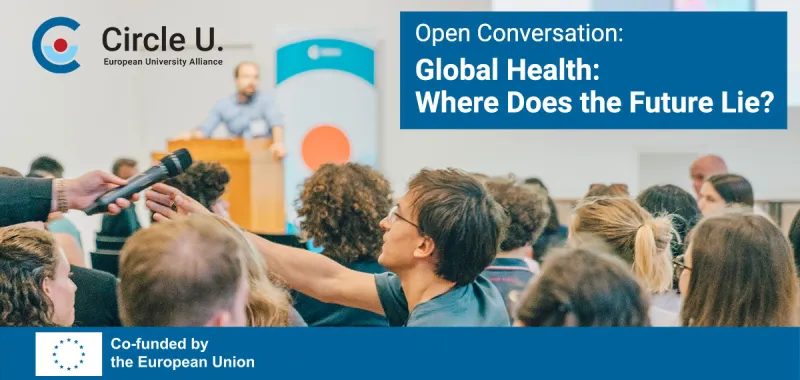
Open Conversation: Global Health: Where Does the Future Lie?

Global health is facing profound change. From shifting funding models and geopolitical pressures to questions about the future of the WHO and the impact of AI on medical knowledge, the challenges are growing. Join experts as they share their perspectives on the future of global health, followed by an open discussion.
Table scene with laptop
Master 5 ECTS

Seminario: Análisis del discurso del activismo en línea

This course examines the discourse of online activism through its linguistic (intensification, affect, proximity), multimodal (memes, reels) and transdisciplinary dimensions. It combines theoretical work (reading portfolio, class discussions) with a hands-on case study on Spanish-language data, carried out in small groups with methodological justification.

The alliance of 9 European Universities